How long can you use a TENS machine for period pain? (And the settings that actually matter)
There is no daily dose limit on a TENS machine the way there is with painkillers. Here is how long a session should run, how often you can use it across your period, whether you can leave it on all day, and the two settings that decide whether it works.
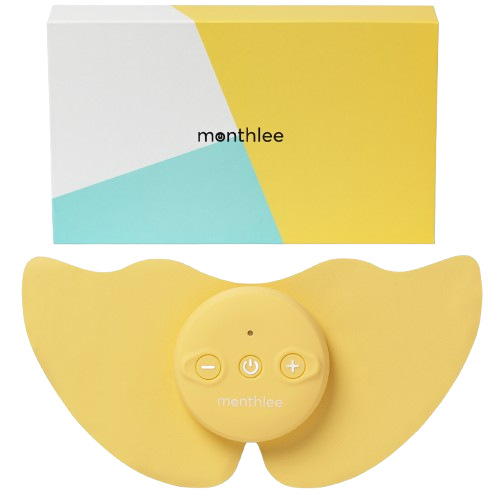
Short answer: You can use a TENS machine as often as you need to during your period — there is no daily dose limit the way there is with ibuprofen, and it does not stop working just because you use it a lot. Most clinical studies run sessions of about 20 to 30 minutes (PMC, 2019), and in practice people wear a small unit for anywhere from half an hour to a few hours, then move the pads and take a short break so the skin underneath gets a rest. Do not fall asleep wearing one — NHS guidance is not to use TENS while you sleep (NHS). The two settings that decide whether it helps are frequency (aim high — roughly 80 to 100 Hz) and intensity (turn it up until the buzz feels strong but never sharp) (Dr Jen Gunter, The Vajenda). TENS relieves the pain; it does nothing about the cause, so keep the doctor's appointment if your periods are severe.
Sofia is 24. A TENS machine turned up in her Christmas stocking — her mum had read about them somewhere — and it sat in a drawer until her next period, when she dug it out at 11pm, stuck the pads on, and then had no idea what any of the numbers meant or how long she was meant to leave it there. Was ten minutes enough? Could she wear it to work all day? Would using it every single month wear it out, or wear her out?
None of that is obvious from the folded instruction sheet. Here are the answers.
How long should one session be?
The short version: 20 minutes is enough to tell whether it's working, and 30 to 60 minutes is a normal session.
Clinical studies of TENS for period pain tend to use sessions of around 20 to 30 minutes. In one study of primary dysmenorrhea, each session was 30 minutes long and participants used the device on up to eight days of each menstrual cycle, across three cycles (PMC, 2019). That length is not a hard rule — it is simply what researchers have found is enough to get a measurable drop in pain.
If you are 20 minutes in and nothing has changed, the fix is almost never a longer session. It is usually the pad position or the intensity — both covered below.
You can run back-to-back sessions through a bad afternoon. The usual pattern is 30 to 60 minutes on, a short break, move the pads a little, back on. The break matters more for your skin than for the effect.
How often can you use it — in a day, and across your period?
As often as you need to. There is no daily cap the way there is with painkillers, where you count doses and stop at the maximum. Nothing is entering your body, so the ceiling that applies to ibuprofen or naproxen simply isn't there.
Across a period, people use TENS on the days it hurts and stop on the days it doesn't. In the study above, that meant up to eight days per cycle with no problem (PMC, 2019).
Two practical limits are worth knowing:
- Your skin. A pad that never moves can leave the skin under it itchy or red. Shift the pads to a fresh patch between sessions. If the skin does go itchy, irritated or red, turn the machine off and take the pads off (NHS).
- The pads. Most gel pads last somewhere between 15 and 30 uses before the gel gives up (Biology Insights). Heavy use across every period gets you there faster. Our angel wings are rated for up to 30 uses — here is how to get the most out of a pair.
Does using it a lot make it stop working? Not the way a painkiller can. Some people find they nudge the intensity up over a session as their skin gets used to the sensation — that is normal, not the device failing. Varying the pulse pattern and moving the pads keeps it feeling effective.
Can you leave it on all day? Can you sleep in it?
All day: with a small wearable unit, plenty of people do wear it for hours at a stretch on a heavy day, hidden under their clothes at work. If you do, keep the intensity moderate rather than maxed, check the skin under the pads every hour or two, and move the pads to a fresh spot when you get the chance.
Overnight: no. NHS guidance is explicit — do not use TENS while you sleep (NHS). The reasons are practical. Asleep, you cannot feel a pad starting to irritate your skin, you cannot turn a setting down, and you will not notice a pad peeling loose — and a pad left in exactly one place for eight hours is the setup most likely to leave a mark. For cramps that hit at night, the better move is a full session in the half hour before you get into bed.
The settings that actually matter
Most period TENS devices have more buttons than you need. Two settings do almost all the work.
1. Frequency — go high. A "high frequency" TENS setting runs from about 50 to 120 Hz, and 80 to 100 Hz is the typical setting for period pain (Dr Jen Gunter, The Vajenda). Low-frequency settings — a few Hz, often felt as a slow thump — have not consistently beaten a placebo for period pain, so if your device labels its modes, start on a fast, steady, buzzing one rather than a slow pulse. Many devices, Emmeline included, just give you a set of pulse patterns to try; pick the one that feels like a smooth, strong buzz.
2. Intensity — strong but never sharp. Set it "to produce a strong sensation, but... not painful" (Dr Jen Gunter, The Vajenda). A faint tickle is an under-dose and won't do much. Turn it up one step at a time until you clearly feel it working, sitting just below the point where it turns sharp, prickly, or starts twitching the muscle. You can raise it again after a few minutes once your skin has settled.
| Setting | What to aim for | Why it matters |
|---|---|---|
| Frequency | High — around 80–100 Hz | High-frequency TENS is the setting with evidence behind it for period pain; low frequency often performs no better than placebo |
| Intensity | Strong but comfortable, never sharp | A weak buzz is under-dosed; the working range is "I definitely know that's on" |
| Session length | 20–60 minutes, repeatable | Long enough for a measurable effect; repeat through the day with breaks |
| Pad position | Lower abdomen below the navel, or lower back either side of the spine | Placement changes the result more than the intensity does — full guide here |
Pulse width is the third setting on some machines. Most period devices fix it and there is nothing to adjust; if yours is adjustable, 100 to 200 microseconds is the usual range. For the physiology of why any of this works — the pain signal, the buzzing, the endorphins — see how TENS actually stops period pain.
What a TENS machine can and can't do for you
Worth being straight about the size of the effect. Across the studies, TENS reduces period pain by roughly 2 points on a 10-point scale — enough to take a 7 down to a 5 — and about 80% of people get some relief (Dr Jen Gunter, The Vajenda). A 2024 Cochrane review found high-frequency TENS does reduce period pain compared with a placebo, with side effects no more common than with NSAIDs like ibuprofen (Cochrane, Han et al. 2024).
So: noticeably better, and faster than a tablet because there is nothing to swallow and absorb. Not an off switch. If you were expecting the pain to vanish, that is the expectation to adjust, not the device.
TENS has been clinically studied for period pain, and how much it helps varies from person to person. It relieves the symptom and does nothing about the cause, so if your periods are severe, getting worse, or regularly stopping you working or sleeping, use the device for relief and still book the appointment — that kind of pain can point to endometriosis, adenomyosis, fibroids or PCOS.
When to stop a session
Turn it off and take the pads off if:
- the skin under a pad goes itchy, red or irritated (NHS)
- the sensation turns sharp, stinging or genuinely painful and turning it down doesn't fix it
- you feel the muscle under the pad cramping rather than buzzing
And do not use TENS at all, without checking with your doctor first, if you are pregnant (unless it is being used in labour under guidance), have a pacemaker or another implanted electronic device, have epilepsy, or have a heart rhythm condition (NHS). Never put the pads on the front of your neck, on your chest, or over broken skin.
Using Emmeline
Emmeline is the wearable TENS device we sell. It runs 20 intensity levels across 6 pulse patterns, so there is room to find the combination your body responds to, and the control unit clips straight into the centre of the angel wings — soft, wing-shaped gel pads — with no trailing wires. Set it the way this guide describes: a strong, steady buzz over the lower abdomen, intensity up until it clearly works.
It lasts 5 to 10 hours per charge and recharges over USB-C in about two hours, so a full day of on-and-off sessions sits comfortably inside one charge. There is no limit on how often you use it in a day — just move the wings to a fresh patch of skin between sessions, and take them off before you sleep. No heat.
Meet Emmeline → — $49.99, wireless, 20 intensity levels across 6 pulse patterns, 5–10 hours per charge, free shipping, 60-day money-back guarantee.
FAQ
How long can you use a TENS machine for period pain in one go? A session of 20 to 60 minutes is normal. Clinical studies typically use around 20 to 30 minutes (PMC, 2019). You can repeat sessions through the day with short breaks and a change of pad position in between.
Can you use a TENS machine too much? There is no daily dose limit like there is with painkillers, and it does not build a real tolerance. The practical limits are skin irritation from a pad staying in one place too long, and the pads themselves wearing out after 15 to 30 uses (Biology Insights).
Can you leave a TENS machine on all day? With a small wearable unit, many people wear it on and off through a bad day. Keep the intensity moderate, check the skin under the pads every couple of hours, and move the pads to a fresh spot when you can.
Can you sleep with a TENS machine on? No. NHS guidance is not to use TENS while you sleep (NHS) — asleep, you can't feel a pad irritating your skin or coming loose. Run a full session before bed instead.
What frequency should a TENS machine be on for period cramps? A high setting, roughly 80 to 100 Hz (Dr Jen Gunter, The Vajenda). If your device has named modes rather than a Hz number, choose one that feels like a fast, smooth, strong buzz rather than a slow thump.
How do I know the intensity is high enough? It should feel clearly strong but never sharp or stinging (Dr Jen Gunter, The Vajenda). A faint tingle is too low to do much. Turn it up a step at a time until you are sure it is working.
How often can you use TENS across your period? Every day that it hurts. In trials, people used it on up to eight days per cycle (PMC, 2019). Stop when the pain stops.
The takeaway
A TENS machine is one of the few period-pain tools with no dose to count. Run it for 20 to 60 minutes at a time, as often as the pain shows up, on a high-frequency setting turned up until the buzz is strong. Move the pads around, take it off before you sleep, and keep the doctor's appointment if your periods are hard. Done right, expect the pain to drop by a couple of points, and to drop faster than a painkiller would — not to disappear.
keep reading
- →Period pain relief
How to help someone with period pain: what to do, what to say, and what to buy
Watching someone you love curl up with period pain and not knowing what to do is hard. Here is what the NHS suggests, what to say, what to leave unsaid, and how to know when it is time to push for a doctor.
- →TENS
Is TENS safe for period pain? Who shouldn't use it, and what to check first
For most people with ordinary period cramps, a TENS device is a low-risk option, but a few groups should not use one without medical advice. Here is who they are, where the pads must never go, and what the research says about side effects.
- →Generic TENS
Emmeline or a generic TENS unit? An honest answer to “is a period TENS just a pink tax?”
A generic TENS unit uses the same technology as a period TENS device and costs less. It also gives you more settings. Emmeline is ours, and what you pay extra for is wearability: no wires, no belt clip, and a battery that lasts a working day. Here's where each one wins, and how to set up a generic if you go that way.