Is TENS safe for period pain? Who shouldn't use it, and what to check first
For most people with ordinary period cramps, a TENS device is a low-risk option, but a few groups should not use one without medical advice. Here is who they are, where the pads must never go, and what the research says about side effects.
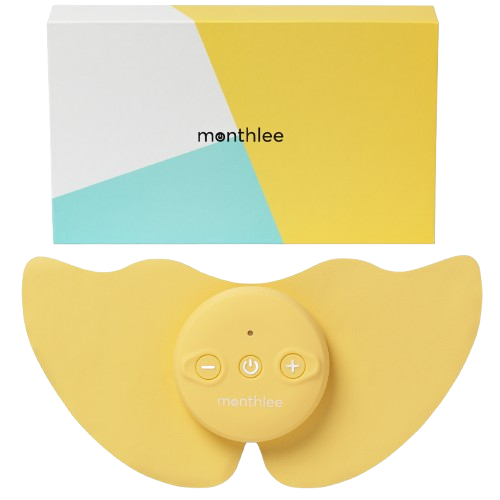
Short answer: The NHS says you should not use a TENS machine if you have epilepsy or a pacemaker, or if you are pregnant, unless a doctor or midwife has told you to (NHS). It also says not to put pads on broken, irritated, infected or numb skin, on your neck, mouth or eyes, or on your chest and back at the same time, and not to use one while asleep, in the bath or shower, or while driving. Outside those cases, trials of TENS for period pain mostly report no unwanted effects, though they were small and poorly reported. The sensation should be a buzz, never pain. Safety information for TENS is thin on period pain specifically, so read the manual that comes with your device and ask a doctor if you are unsure.
If you are about to put electrical pads on your lower belly for the first time, wanting to check it is okay first is the right instinct. This is the page for that.
Meet Hannah. She is 34, has had painful periods since her teens, and has a hot-water bottle problem: it keeps her on the sofa. A friend suggested a TENS device. Hannah's questions were not "does it work?" They were "am I allowed?", "what if I'm on the pill?" and "can I wear it in the shower so I don't have to take it off?" Those are the questions below.
Who should not use a TENS device without medical advice
The NHS list is short and specific (NHS):
| If you... | What the NHS says |
|---|---|
| have a pacemaker | Do not use unless your doctor says it is fine |
| have epilepsy | Do not use unless your doctor says it is fine |
| are pregnant (or might be) | Do not use unless your doctor or midwife says it is fine |
| are not sure what is causing your pain | See a healthcare professional before using a TENS machine |
Your device's own manual will carry a longer list, and it is the one that applies to your exact machine. Read it. If anything on it matches you, ask your doctor or pharmacist before the first use. This is general information, not medical advice for your situation.
Where the pads must never go
The NHS names the places to avoid (NHS):
- Skin that is broken, irritated, infected or numb. Numb skin matters because you rely on feeling the buzz to know the level is right.
- Your neck, mouth or eyes.
- Your chest and back at the same time.
For period pain, the usual spots are the lower belly or the lower back, one at a time. Exact positions are in where to put TENS pads for period cramps.
When not to use it, even if you are healthy
The same NHS page says not to use a TENS machine while sleeping, in the bath or shower, or while driving or using tools or machinery. These are about circumstances, not about you. Emmeline is wireless and small, so it is easy to forget it is switched on. Take it off before bed and before you step into water.
What are the side effects?
The honest answer is that nobody has measured them well. A 2024 Cochrane review of TENS for period pain pooled 20 randomised trials with 585 women and noted that "unwanted effects were poorly reported in most studies" (Cochrane). Where trials did report them, most found none: two of the three high-frequency trials against placebo or no treatment reported no adverse effects, and no low-frequency trial reported any (Cochrane). The same review rated the overall certainty of the evidence as low to very low, mainly because the studies were small.
So "no side effects were reported" is accurate, and "we know it has no side effects" is not. The practical one to watch is the skin. The NHS says that if your skin becomes itchy, irritated or red, you should turn the machine off and remove the pads (NHS).
How to start safely
- Switch the device off while you attach the pads. The NHS advises this (NHS).
- Use clean skin and leave a gap between pads.
- Turn the level up slowly until you feel a tingle. It should not hurt. If it does, turn it down.
- Check the skin afterwards. Itching, redness or soreness is a reason to stop (see above).
- Look for a recognised mark on any TENS machine. The NHS suggests a CE or UKCA mark in the UK (NHS).
Emmeline specifics. Emmeline has 20 intensity levels and 6 pulse patterns, so you can start low and work up. It is TENS only, with no heat. Its angel wing pads are rated for up to 30 uses, and worn-out pads grip badly, so replace them rather than pressing on a tired one.
Is TENS enough on its own?
TENS is pain relief for ordinary period cramps. It does nothing about an underlying cause. If your pain is severe, getting worse, or is not helped by usual measures, that is a reason to see a doctor whatever device you use, and our guide to whether your period pain is normal covers the signs. The Cochrane evidence is also a reminder of scale: TENS may help some people, how much varies, and the certainty of the evidence is low.
FAQ
Is a TENS machine safe to use on your period? For most people with ordinary period cramps, yes, provided none of the NHS exclusions apply. Those are epilepsy, a pacemaker and pregnancy, unless a doctor says otherwise (NHS).
Can I use TENS if I might be pregnant? The NHS says not to use TENS if you are pregnant unless a doctor or midwife has told you to. If there is any chance you are, check with a healthcare professional first.
Can I wear Emmeline in the shower or while asleep? No. The NHS advises against using any TENS machine in the bath or shower, or while sleeping (NHS).
Can I use it with painkillers or a hot-water bottle? TENS is drug-free, so people often use it alongside painkillers. Whether your own medicines are fine is a question for your pharmacist. The manual for your device will say whether to use heat on the same area.
What if the pads make my skin red or itchy? Turn the machine off and remove the pads, as the NHS advises. If it keeps happening, ask a pharmacist or doctor about alternatives for sensitive skin.
How do I know a TENS device meets safety standards? The NHS suggests looking for a CE or UKCA mark (NHS). Check the manual too.
The honest summary
For most people, TENS for period cramps comes down to a few rules: skip it if you have epilepsy, a pacemaker or are pregnant (unless a doctor says yes), keep pads off broken or numb skin and off your neck, face and chest, never wear it in water, asleep or driving, and start low. If you are unsure, ask a professional first.
See Emmeline → — $49.99, with angel wing refills from $11.99 per 2-pack.
keep reading
- →Period pain relief
How to help someone with period pain: what to do, what to say, and what to buy
Watching someone you love curl up with period pain and not knowing what to do is hard. Here is what the NHS suggests, what to say, what to leave unsaid, and how to know when it is time to push for a doctor.
- →Generic TENS
Emmeline or a generic TENS unit? An honest answer to “is a period TENS just a pink tax?”
A generic TENS unit uses the same technology as a period TENS device and costs less. It also gives you more settings. Emmeline is ours, and what you pay extra for is wearability: no wires, no belt clip, and a battery that lasts a working day. Here's where each one wins, and how to set up a generic if you go that way.
- →Beurer comparison
Beurer EM50 or Emmeline? A straight comparison of heat-and-TENS versus TENS-only for period pain
The Beurer EM50 Menstrual Relax combines TENS with heat in one flexible pad and has a 5-year warranty. Emmeline is ours: TENS-only, with 5–10 hours of use per charge against the Beurer's two or so. Here's a straight comparison of heat, battery, pads, warranty and price, and who each one suits.