Where to put TENS pads for period cramps (front, back, and the fix when it's not working)
Pad position changes how much a TENS device helps more than the intensity setting does. Here is exactly where the pads go for front cramps and for period back pain, why those two spots, and what to move when you are not feeling any relief.
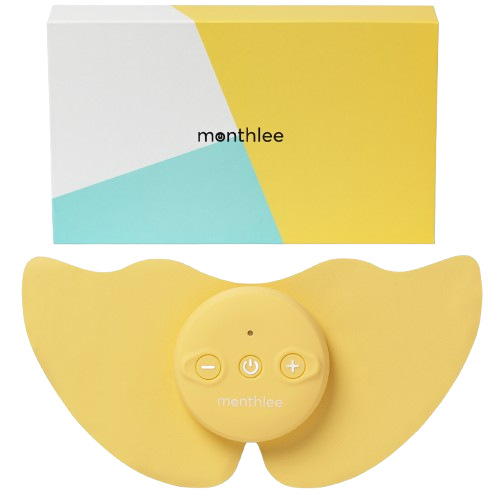
Short answer: For cramps low in your abdomen, put the pads on your lower belly — one either side of the midline, below the navel, roughly level with the top of your pubic bone. Never directly on the navel. For period back pain, put them on your lower back, one either side of the spine, level with the dimples above your buttocks. Never on the spine itself. Both spots work because the pain from your uterus travels along nerves that surface in those two areas (Dr Jen Gunter, The Vajenda). If you are barely feeling any relief, position is usually the reason — move the pad a little at a time until the buzzing feels strong and even, then leave it there. TENS is pain relief, not a cure for anything, and period pain that is severe or getting worse still needs a doctor.
If you have just unboxed a TENS device mid-cramp and you are staring at two pads with no idea where they go, this is the page for you. Placement is the part nobody explains well, and it is the part that decides whether the thing works.
Meet Priya. She is 29, works at a desk, and gets it in two places every month: a deep ache low down in front, and a duller one that wraps around her lower back by the afternoon. She bought a wearable TENS unit on a friend's recommendation, stuck the pads roughly where the box picture showed, felt a mild tingle, and thought: is that it? It wasn't. Her pads were two inches too high.
The two-line version, on your body
| Where the pain is | Where the pads go | The landmark to find |
|---|---|---|
| Cramps low in the abdomen | Lower belly, one pad either side of the midline | Below the navel, level with the top of the pubic bone |
| Ache in the lower back | Lower back, one pad either side of the spine | Level with the dimples just above your buttocks |
| Both, at once | Treat the front first | Back pain during a period is often referred from the same contractions |
Everything below is detail on those three rows.
Front placement: for cramps low down
This is the default for ordinary period cramps, because that is where the sensation is strongest and closest to its source. Your uterus contracts to shed its lining, and those contractions are what you feel as cramping (NHS).
Place the pads on clean, dry skin below the navel, one on each side of the midline, roughly a hand's width apart, sitting low — level with or just above the top of the pubic bone. You want them over the area that actually hurts, not up around the belly button.
Two things people get wrong here:
- Too high. Pads up near the navel sit above the pain. Drop them lower than feels natural.
- On the navel itself. Skin there is uneven and the contact is poor. Keep the pads to either side of it.
Back placement: for the ache that wraps around
Period pain is not only a front-of-body thing. The nerves carrying the signal from your uterus enter the spinal cord low down, so a lot of people feel it as a band across the lower back or deep in the sacrum.
For this, place the pads on your lower back, one either side of the spine, level with the two small dimples above your buttocks. In clinical descriptions, the upper position covers the nerve level that carries information from the uterus and the lower position covers nerves that come out lower down in the pelvis (Dr Jen Gunter, The Vajenda).
Never put a pad directly on your spine — keep them on the muscle either side.
Can you treat the front and back at the same time?
If your device has one pair of pads — like most small wearable units, Emmeline included — you treat one site at a time. Start with the front, because that is usually where the cramp originates, and the back ache often eases once the front does. If the back pain is still there after 20 to 30 minutes, move the pads round and treat it directly.
Devices with two separate channels can run front and back together, and some people with pain in both places find that combination the most useful (Dr Jen Gunter, The Vajenda). It is not necessary — it is an option if you own that kind of unit.
"I tried it and I barely felt anything" — the placement fix
This is Priya's problem, and it is almost always one of four things. Work through them in order.
1. The pad is in the wrong spot. This is the most common one. Move each pad an inch at a time and turn the intensity up slightly as you go. You are hunting for a position where the buzzing feels strong, even, and spread across the area — not a faint flutter in one corner. In one 2023 trial, researchers got markedly better pain relief by adjusting each person's electrode position individually until it produced a strong tingling sensation, rather than accepting a fixed textbook placement (PMC, 2023). Your best spot is a couple of centimetres from where you first guessed.
2. The contact is poor. If the buzz is patchy — strong here, nothing there — the pad is not fully stuck. Peel it off, check the gel, press it back down across its whole surface.
3. The intensity is too low. A gentle tickle is not a working dose. The setting should feel strong but never sharp or stinging (Dr Jen Gunter, The Vajenda). Creep it up one level at a time until you are at "I definitely know that's on," then stay there. You can nudge it up again after a few minutes as your skin gets used to it.
4. Your expectations are off. TENS takes the top off the pain; it does not switch it off. Across the pooled trials, the average reduction is roughly 2 points on a 10-point pain scale — enough to move a 7 down to a 5 (Dr Jen Gunter, The Vajenda). A 2024 Cochrane review found high-frequency TENS does reduce period pain compared with placebo, with no more side effects than NSAIDs like ibuprofen (Cochrane, Han et al. 2024). "Noticeably better, faster than a tablet" is the realistic win. Some people get more; some get less.
Getting good contact — the boring part that matters
The pad has two jobs at once: stick to you and conduct through your skin. Both live in the same thin layer of gel, so anything between the gel and clean skin costs you relief.
- Wash and dry the area first. Mild soap, water, dry properly. Body oil and lotion are the main reason pads slide and fade (iReliev).
- Moisturiser after, never before. A pad landing on a film of morning lotion never makes proper contact.
- Lots of hair in the way? Trim it rather than shaving right before — freshly shaved skin can be more sensitive under stimulation.
- Tired pads give weak, patchy signals. Most gel pads are good for somewhere between 15 and 30 uses before the gel gives up (Biology Insights). If you have been pushing the intensity higher and higher over months, the pad is probably the reason, not your pain. Our angel wings are rated for up to 30 uses — more on making a pair last here.
Settings, briefly
Placement does most of the work, but the setting has to back it up. Use a high-frequency setting, roughly 80 to 100 Hz, at an intensity that feels strong and comfortable (Dr Jen Gunter, The Vajenda). On a device with numbered levels, start around the middle and work up. There is no daily limit the way there is with painkillers, and TENS does not build tolerance — most people run it for 30 to 60 minutes, then take a short break and move the pads slightly. For the full picture on how TENS interrupts the pain signal, see how TENS actually stops period pain.
Where not to put a pad
Be straight about this. Never place pads:
- Directly on your spine, the front of your neck, or your chest and heart area
- Over broken, infected or irritated skin (Dr Jen Gunter, The Vajenda)
- On numb areas, or skin where you cannot feel the sensation properly
And do not use TENS at all without talking to your doctor first if you are pregnant (unless it is being used in labour under guidance), have a pacemaker or another implanted electronic device, have epilepsy, or have a heart rhythm condition. If your pelvic pain has never been assessed, get that appointment — TENS relieves the symptom and does nothing about the cause. Severe or worsening period pain can point to endometriosis, adenomyosis, fibroids or PCOS, and it is worth investigating.
How this works with Emmeline
Emmeline is the wearable TENS device we sell. There are no trailing wires: the control unit clips straight into the centre of the angel wings — soft, wing-shaped gel pads that stick over your lower abdomen where the cramping is strongest. Position the wings using the same rule as above: low, below the navel, centred over the pain.
Because it is fully wireless, once the wings are on you can move around freely, sit at your desk, or get on with your day with it hidden under your clothes. It runs 20 intensity levels across 6 pulse patterns, so there is room to hunt for the setting your body responds to, and it lasts 5 to 10 hours per charge, recharging over USB-C in about two hours. No heat.
If you get period back pain too, the wings can go on your lower back instead, positioned either side of the spine as described above — just treat one site at a time.
FAQ
Where exactly do TENS pads go for period cramps? On the lower abdomen, one pad either side of the midline, below the navel and roughly level with the top of the pubic bone. For period back pain, on the lower back either side of the spine, level with the dimples above the buttocks. Never on the navel or directly on the spine.
Front or back — which is better? Front, for most people, because that is closest to where the cramping starts. Use the back position if your period pain shows up mainly as a lower-back ache, or move the pads there after treating the front if the back pain lingers.
Why can't I feel much when the device is on? Usually the pad is slightly off the best spot, or the intensity is too low, or the pad has lost contact. Move the pad a little at a time and raise the intensity until the buzzing is strong and even across the area (PMC, 2023).
Can I move the pads while it's running? Turn the intensity down first, reposition, then bring it back up. Moving pads under full power feels unpleasant and is unnecessary.
How long before it helps? Most people feel a change within a few minutes of getting the placement and intensity right — faster than a tablet, which has to be absorbed first.
Can I use it every month, every day of my period? Yes. There is no daily cap and it does not build tolerance. Keep sessions to 30 to 60 minutes with short breaks, and shift the pads slightly each time so one patch of skin isn't always under a pad.
Is it safe? For most people, yes. Check with your doctor first if you are pregnant, have a pacemaker or implanted electronic device, have epilepsy or a heart rhythm condition, or if your pelvic pain has never been assessed (Dr Jen Gunter, The Vajenda).
The takeaway
If a TENS device is underwhelming you, do not conclude it doesn't work before you have moved the pads. Position beats intensity, the best spot is usually a couple of centimetres from your first guess, and the target is a strong, even buzz over the exact area that hurts.
Meet Emmeline → — $49.99, wireless, 20 intensity levels across 6 pulse patterns, 5–10 hours per charge, free shipping, 60-day money-back guarantee.
keep reading
- →Period pain relief
How to help someone with period pain: what to do, what to say, and what to buy
Watching someone you love curl up with period pain and not knowing what to do is hard. Here is what the NHS suggests, what to say, what to leave unsaid, and how to know when it is time to push for a doctor.
- →TENS
Is TENS safe for period pain? Who shouldn't use it, and what to check first
For most people with ordinary period cramps, a TENS device is a low-risk option, but a few groups should not use one without medical advice. Here is who they are, where the pads must never go, and what the research says about side effects.
- →Generic TENS
Emmeline or a generic TENS unit? An honest answer to “is a period TENS just a pink tax?”
A generic TENS unit uses the same technology as a period TENS device and costs less. It also gives you more settings. Emmeline is ours, and what you pay extra for is wearability: no wires, no belt clip, and a battery that lasts a working day. Here's where each one wins, and how to set up a generic if you go that way.