How to help someone with period pain: what to do, what to say, and what to buy
Watching someone you love curl up with period pain and not knowing what to do is hard. Here is what the NHS suggests, what to say, what to leave unsaid, and how to know when it is time to push for a doctor.
Short answer: The most useful things you can do are practical and small. The NHS lists a warm bath or shower, a heat pad or hot water bottle on the tummy wrapped in a tea towel, a tummy and back massage, gentle exercise such as walking or yoga, and painkillers such as paracetamol or ibuprofen (NHS). Beyond that, believe them, take something off their plate, and let them choose. If the pain is severe, getting worse, or stopping them doing normal things, the NHS says to see a GP (NHS). If you are buying a gift, pick something that makes the bad days easier rather than something that comments on them.
Meet Sam. His girlfriend Priya gets period pain badly enough that she cancels plans on day one, every month. Sam wants to help and keeps getting it slightly wrong: he asks "is it that time again?", suggests she "just take a tablet", and then hovers. Priya does not want a speech. She wants the hot water bottle filled and the evening cleared. This guide is for Sam, and for any parent, partner, friend or flatmate in the same spot.
What actually helps, according to the NHS
The NHS page on period pain gives a short self-help list (NHS). Each item is something you can do for someone, not just tell them about:
| The NHS suggests | What you can do |
|---|---|
| A warm bath or shower | Run it, find a clean towel, keep the house quiet |
| A heat pad or hot water bottle on the tummy, wrapped in a tea towel | Fill it, wrap it, and top it up when it cools |
| Massaging the tummy and back | Offer, and stop the moment they say stop |
| Gentle exercise such as yoga, swimming, walking or cycling | Suggest a slow walk, only if they feel like one |
| Painkillers such as paracetamol or ibuprofen | Bring water and the box; they know what suits them |
Notice what is not on the list: advice. You are not the expert on their body. They are.
What to say (and what to skip)
None of this comes from a clinical source, so treat it as common sense rather than evidence. It is the part of the guide that is just us talking.
Try:
- "That sounds awful. What would help right now?"
- "I'll sort dinner. You don't have to do anything."
- "Want me to move our plans?"
Skip:
- "Is it that time of the month?" It turns their pain into a punchline.
- "It's only a period." It is a real pain, and the NHS describes it as common for good reason (NHS), but common is not the same as small.
- "Have you tried yoga?" Unasked advice, even good advice, lands as doubt.
The pattern is the same each time. Ask rather than assume, and take the person at their word about how bad it is.
When "normal" stops being the right word
You are not a doctor, and you do not need to be. You only need to know when to nudge. The NHS says to see a GP if periods become more painful, heavier or irregular, or if the pain stops someone doing their usual daily activities. The same page lists pain during sex or when peeing or pooing, bleeding between periods, a swollen tummy, loss of appetite and unexplained weight loss (NHS). It also says that severe pain that is worse than usual and not helped by painkillers calls for an urgent GP appointment or NHS 111 (NHS).
If Priya is cancelling plans every month, that first line applies. The kindest thing Sam can do is offer to come to the appointment, or to help her write down what happens each cycle. Our guide on whether your period pain is normal has a plain-English checklist she can read in private.
What about a TENS device as a gift?
A TENS device sends small electrical pulses through pads on the skin. It is drug-free and not a replacement for seeing a doctor if something seems wrong. The strongest summary of the research is a 2024 Cochrane review of 20 trials with 585 women. It found that both high- and low-frequency TENS "may reduce pain compared with placebo (dummy treatment) or no treatment", while rating the certainty of that evidence as low (Cochrane). In plain terms: it has been studied for period pain, it may help, and how much it helps varies from person to person.
That makes it a gift to give with a light touch. A few honest points before you buy:
- It is personal. Some people love the buzzing feeling and some do not. A gift receipt matters more than usual.
- Check she is allowed to use one. The NHS says not to use TENS if you have epilepsy or a pacemaker, or are pregnant, unless a doctor says it is fine (NHS). Our TENS safety guide covers the full list.
- It is not a heat pad. Emmeline is TENS only, with no heat. If she lives on her hot water bottle, a heat pad may suit her better, and the two can sit side by side. See heating pad vs TENS.
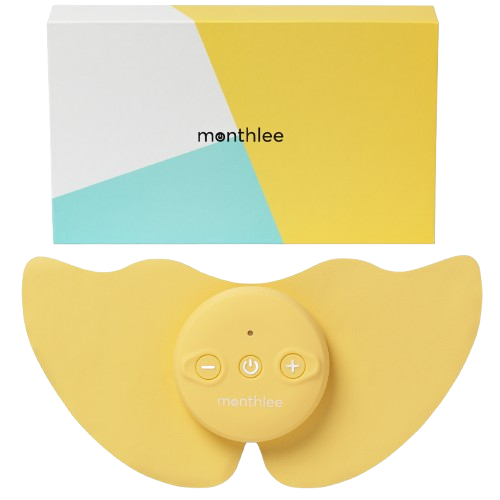
Emmeline is small and wireless, with 20 intensity levels and 6 pulse patterns, and its angel wings pads are rated for up to 30 uses. If she hasn't asked for one, though, a surprise device can feel like a comment on her body, so a gentler gift may be better.
Gifts that say "I've got you" without saying anything
Ranked by how hard they are to get wrong:
- Time. A cleared evening, a cooked meal, a lie-in. Free, and it is what the person usually wants.
- A good hot water bottle or heat pad, since heat is on the NHS list (NHS).
- Their favourite comfort things, such as snacks, a soft blanket or a long bath's worth of bubbles.
- A TENS device, if she has mentioned wanting one or you have talked it through first.
FAQ
What is the best thing to do for someone with period cramps? Ask what would help, then do the practical thing: heat, a warm bath, painkillers if they want them, a cleared evening. The NHS list above is a good menu (NHS).
What should I not say to someone with period pain? Avoid jokes about "that time of the month", "it's only a period", and unasked advice. Believe them first.
When should someone with period pain see a doctor? The NHS says to see a GP if pain becomes worse, heavier or irregular, or stops them doing usual activities. Severe pain that painkillers have not helped means an urgent GP appointment or NHS 111 (NHS).
Is a TENS machine a good gift for period pain? It can be, if the person wants one and is safe to use one. TENS has been studied for period pain and may help, but the evidence is low certainty and results vary (Cochrane). Include a gift receipt.
Can I use TENS for someone else's pain? It is safest if the person places and controls the device themselves, so they can turn it down the second they want to.
The honest summary
You cannot take the pain away, and you do not have to. Show up, ask what helps, do the small practical things, and know when to nudge towards a GP. A gift is a nice extra, never a substitute for any of that.
See Emmeline → — $49.99, with angel wings refills from $11.99 per 2-pack.
keep reading
- →TENS
Is TENS safe for period pain? Who shouldn't use it, and what to check first
For most people with ordinary period cramps, a TENS device is a low-risk option, but a few groups should not use one without medical advice. Here is who they are, where the pads must never go, and what the research says about side effects.
- →Generic TENS
Emmeline or a generic TENS unit? An honest answer to “is a period TENS just a pink tax?”
A generic TENS unit uses the same technology as a period TENS device and costs less. It also gives you more settings. Emmeline is ours, and what you pay extra for is wearability: no wires, no belt clip, and a battery that lasts a working day. Here's where each one wins, and how to set up a generic if you go that way.
- →Beurer comparison
Beurer EM50 or Emmeline? A straight comparison of heat-and-TENS versus TENS-only for period pain
The Beurer EM50 Menstrual Relax combines TENS with heat in one flexible pad and has a 5-year warranty. Emmeline is ours: TENS-only, with 5–10 hours of use per charge against the Beurer's two or so. Here's a straight comparison of heat, battery, pads, warranty and price, and who each one suits.