Is my period pain normal? When to push through and when to see a doctor
Period pain is common — but 'common' doesn't mean 'normal to just accept.' Here's the honest guide to what's typical, what's a warning sign, and when to get checked out.
"Is this normal?" is one of the most Googled questions about period pain — and one of the least clearly answered.
The reason it's hard to answer is that "normal" is doing a lot of heavy lifting. Yes, period pain is common. Statistically, up to 90% of people who menstruate experience some degree of pain during their period. But common and "just something to live with" are not the same thing.
This guide breaks down what typical period pain looks like, what patterns should prompt a doctor's visit, and what you can do regardless of which category you fall into.
What typical period pain (primary dysmenorrhea) looks like
Primary dysmenorrhea is the medical term for period pain that isn't caused by an underlying condition. Here's what it typically looks like:
Timing: Starts on day 1 or day 2 of your period, usually within a few hours of bleeding beginning.
Duration: Peaks within 24–48 hours, then eases. Usually resolved by day 3.
Location: Lower abdomen (below the belly button), often radiating to the lower back and upper thighs.
Character: Cramp-like, wave-like, or a constant dull ache.
Response to treatment: Responds reasonably well to ibuprofen or naproxen (NSAIDs), heat, or TENS therapy.
Impact: May slow you down or require pain relief, but doesn't completely prevent you from functioning.
This type of pain is caused by prostaglandins — hormone-like chemicals released during your period that cause the uterus to contract to shed the lining. Some people produce more prostaglandins than others, leading to more intense contractions and more pain. It's real, it's not in your head, and it absolutely deserves to be treated — but it typically doesn't indicate an underlying condition.
When to see your GP or OB-GYN
The following patterns fall outside what should be dismissed as "just bad cramps." If you recognise any of these, make an appointment and specifically mention them:
Pain that starts before your period begins Typical period cramps start with or after bleeding. Pain that begins several days before — particularly in the lower abdomen or pelvis — is more consistent with endometriosis than primary dysmenorrhea.
Pain that doesn't respond to ibuprofen or naproxen Over-the-counter NSAIDs work well for most primary dysmenorrhea. If they barely touch your pain, or you need prescription-strength medication to function, that's a signal worth investigating.
Period pain that's getting progressively worse over time Primary dysmenorrhea tends to be relatively stable, or even improves with age. Pain that's been worsening year on year — particularly if you're in your late 20s or 30s — is worth investigating. Conditions like endometriosis and adenomyosis often present this way.
Pain during sex Dyspareunia (painful sex) alongside period pain is one of the classic presentations of endometriosis. Deep pelvic pain during penetrative sex should be flagged to your GP or OB-GYN.
Painful bowel movements or urination during your period This can indicate endometrial deposits on the bowel or bladder — again, a hallmark of endometriosis.
Heavy bleeding Periods that soak through a pad or tampon every 1–2 hours, cause clots larger than a 10p/quarter, or last longer than 7 days may indicate fibroids, adenomyosis, or endometriosis. Heavy bleeding and bad cramps together warrant investigation.
Pelvic pain outside your period If pain persists through your cycle and isn't just during menstruation, that changes the picture.
Fever, unusual discharge, or pain that came on suddenly and severely These suggest a possible infection — pelvic inflammatory disease (PID) or an ovarian cyst complication. Seek medical attention promptly.
What doctors will look for
When you see your GP (UK) or OB-GYN (US), they'll likely:
- Take a detailed history — your cycle length, pain timing and character, bleeding pattern, sexual history, previous pregnancies
- Ask about associated symptoms — bowel/bladder, sex, fatigue, skin, hair
- Potentially offer a pelvic examination
- Order blood tests — checking for anaemia (from heavy bleeding), hormone levels, STI screening if relevant
- Arrange an ultrasound — transvaginal ultrasound can detect fibroids, endometriomas (endo cysts), and other structural issues
Note: a normal ultrasound does not rule out endometriosis. Endo is definitively diagnosed by laparoscopy (keyhole surgery) — meaning you can have significant endometriosis and a completely normal scan. Don't let a "nothing found on ultrasound" be the end of the conversation if your symptoms suggest otherwise.
How to advocate for yourself at an appointment
Women's pain is systematically undertreated. Studies consistently show that pain described by women is rated as less severe by healthcare providers than the same pain described by men. This is not your imagination — it's a documented healthcare disparity that's slowly being addressed.
Here's how to maximise your appointment:
Use a symptom diary. Two to three months of detailed notes — pain score (1–10), start date relative to your period, duration, what helped, what didn't, associated symptoms — is more powerful than a verbal description. Apps like Clue or Flo make this easy.
Be specific about impact. Don't say "really bad cramps." Say: "On day 1, my pain is 8/10. I can't attend school/work. I've taken 400mg ibuprofen every 6 hours and it doesn't adequately control the pain. This has happened every month for 3 years."
Name conditions explicitly. If you're concerned about endometriosis, say so: "I'm concerned this might be endometriosis. I'd like to discuss whether a referral to a gynaecologist is appropriate." You can ask — it's your healthcare.
Request a referral if you feel dismissed. In the UK, you can request a secondary care referral. If your GP declines, ask for the reasoning in writing, or seek a second opinion. In the US, check your insurance for direct OB-GYN access.
What you can do right now, regardless of diagnosis
Whether your pain is primary dysmenorrhea or caused by an underlying condition — you don't have to just endure it while you figure out the cause.
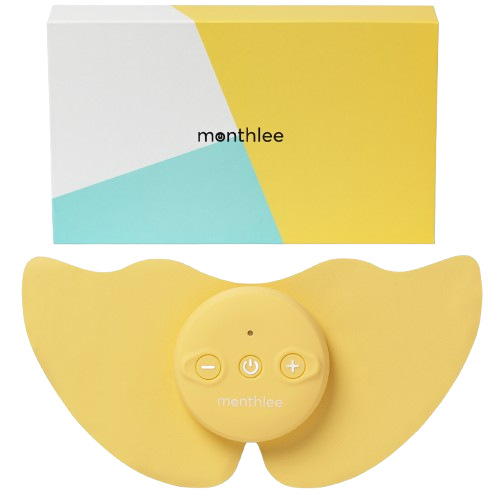
TENS therapy is one of the most effective drug-free options for period pain. A wearable TENS device sticks to your lower abdomen and intercepts the pain signal before it reaches the brain. It works in minutes, has no side effects, and can be used alongside any other treatment. Many people with endometriosis or adenomyosis find it's the most consistent tool in their pain management kit.
NSAIDs taken before pain peaks (ideally the evening before your period is due) are significantly more effective than reactive dosing. Don't wait until you're already at a 7/10 before taking ibuprofen.
Heat — continuous application to the lower abdomen — relaxes uterine muscle and boosts local blood flow. Combine with TENS for a stronger effect.
Magnesium (300–360mg elemental, starting the week before your period) reduces muscle cramping severity with good evidence behind it.
The bottom line
Period pain is common. Debilitating period pain is not something you should simply accept as your lot. The distinction matters.
If your pain fits the typical pattern and responds to standard treatment — treat it effectively, and feel entitled to do so. If it doesn't fit the typical pattern, or it's getting worse, or it's affecting your sex life, bowel habits, or daily function — push for investigation.
You know your body. Trust it.
Start here: drug-free relief that works in minutes
Emmeline is a wearable TENS device for period pain. Whether you're managing typical cramps or working through something more complex, she's built to give you relief quickly — without drugs, without side effects, and without anyone knowing she's there.
Meet Emmeline → — 20 intensity levels, 6 pulse patterns, up to 10 hours. Free shipping. 60-day money back.
keep reading
- →TENS
How long can you use a TENS machine for period pain? (And the settings that actually matter)
There is no daily dose limit on a TENS machine the way there is with painkillers. Here is how long a session should run, how often you can use it across your period, whether you can leave it on all day, and the two settings that decide whether it works.
- →Endometriosis
Does TENS actually help endometriosis pain? What a new 2026 study found
A new pre-post study out of Penn State followed 27 women with surgically confirmed endometriosis using a TENS unit for three months. The headline pain score didn't move enough to call it a win — but quality of life and pain-medication use both did, significantly. Here's what the study actually measured, what it didn't, and how it's different from the stronger evidence behind TENS for ordinary period pain.
- →Period cramp simulator
Period cramp simulators: what the machine actually does
You've seen the videos. A man gets wired up, lasts eleven seconds, and apologises to everyone he's ever met. Here's what the machine really is, what it proves, and what it can't.