Period cramp simulators: what the machine actually does
You've seen the videos. A man gets wired up, lasts eleven seconds, and apologises to everyone he's ever met. Here's what the machine really is, what it proves, and what it can't.
You have probably seen the videos. Two men sit on a sofa. Someone sticks pads on their stomachs and turns a dial. Eleven seconds later, one of them is curled on the floor apologising to his mother.
They are funny. They are also more interesting than they look, because the machine in those videos is not a novelty item. It is a normal piece of medical equipment, turned up.
Here is what it does, what it proves, and where it stops being useful.
What the machine is
A period cramp simulator is an electrical muscle stimulator. Most are ordinary TENS or EMS units, sold for pain relief or physiotherapy, run at high intensity.
The device sends an electrical pulse through pads on the skin. The pulse reaches the motor nerves. The motor nerves fire, and the abdominal muscles contract whether you want them to or not.
That involuntary contraction is the point. It is the closest a machine can get to what the uterus does during a period.
There is no special "period" technology inside. Turn the same device down and you get a physiotherapy tool. Turn it up and you get a viral video.
What it gets right
The sensation is genuinely similar in one important way: you cannot stop it.
That is the part people miss. A cramp is not a pain you brace against, like stubbing a toe. It is your own muscle contracting hard, on its own schedule, and no amount of willpower releases it.
The simulator reproduces that helplessness accurately. That is why the reaction in the videos is so consistent. It is not the intensity that shocks people. It is the loss of control.
The machine also lands the right muscle group. Abdominal contraction is roughly where period pain starts, so the location is honest.
What it gets wrong
Quite a lot, and it is worth being clear about.
Duration. The dial goes off after a few seconds. A real period lasts days. Pain that peaks for 30 seconds is an experience. Pain that returns every few minutes for 48 hours is a different thing entirely, and no demonstration reproduces it.
Everything that is not the cramp. Period pain rarely arrives alone. It comes with back pain, nausea, headaches, exhaustion, and the hormonal shift underneath all of it. The machine simulates one muscle. It cannot simulate the rest.
Consent. The person in the chair chose this and can stop it. Nobody chooses a period, and nobody can turn it off.
Calibration. The dial is set by whoever is holding it, usually for comedy. It is not measuring anything. A number on a simulator does not correspond to a number in anyone's body.
So the videos are a decent demonstration of one symptom and a poor measure of the whole experience. If a man says he now understands periods, he understands about a tenth of one.
Are they safe?
Broadly, at low settings, on a healthy adult. The concerns are the same as for any electrical stimulation device.
Do not use one if you have a pacemaker or another implanted electronic device. Do not use one if you are pregnant or have epilepsy. Do not place the pads over the heart, the front of the neck, or broken skin.
And do not run one at maximum for laughs on someone who has not been asked properly. Muscle contraction at high intensity can leave you sore for a day or two.
The part nobody mentions
Here is the bit that surprises people.
The same technology, turned down, is one of the best drug-free tools for period pain there is.
At low intensity, the pulse does not force the muscle to contract. It does something else. It floods the nerve pathway that carries the pain signal, so less of that signal reaches the brain. It also prompts your body to release its own endorphins.
Physiotherapists have used this for decades. Midwives use it in labour wards. It is the same box, the same pads, and the same physics — pointed in the opposite direction.
Turn it up and you cause a cramp. Turn it down and you interrupt one.
If you are here to buy a gift
Some people find these videos and go looking for something to give to a partner, sister, or friend who actually has bad periods.
If that is you: do not buy the simulator. It is a party trick, and it will not be funny to someone who lives with the real version.
Buy the version that turns it down.
The same technology, pointed the other way
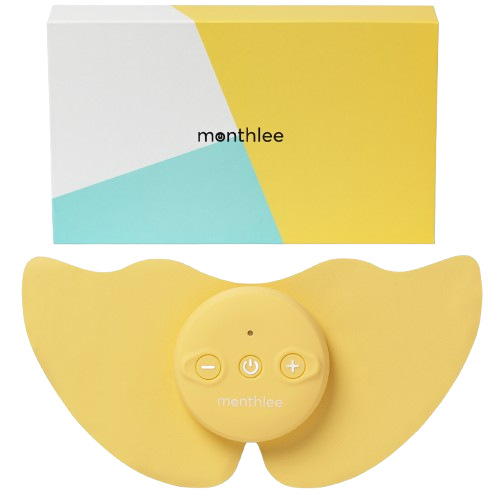
Emmeline is a wearable TENS device for period pain. It attaches to our angel wings — soft wing-shaped pads that stick where it hurts.
Silent, hidden under clothes, and it works while you get on with your day.
Meet Emmeline → — 20 intensity levels, up to 10 hours of use per charge, free shipping, 60-day money-back guarantee.
keep reading
- →Period pain relief
How to help someone with period pain: what to do, what to say, and what to buy
Watching someone you love curl up with period pain and not knowing what to do is hard. Here is what the NHS suggests, what to say, what to leave unsaid, and how to know when it is time to push for a doctor.
- →TENS
Is TENS safe for period pain? Who shouldn't use it, and what to check first
For most people with ordinary period cramps, a TENS device is a low-risk option, but a few groups should not use one without medical advice. Here is who they are, where the pads must never go, and what the research says about side effects.
- →Generic TENS
Emmeline or a generic TENS unit? An honest answer to “is a period TENS just a pink tax?”
A generic TENS unit uses the same technology as a period TENS device and costs less. It also gives you more settings. Emmeline is ours, and what you pay extra for is wearability: no wires, no belt clip, and a battery that lasts a working day. Here's where each one wins, and how to set up a generic if you go that way.