Emmeline or a generic TENS unit? An honest answer to “is a period TENS just a pink tax?”
A generic TENS unit uses the same technology as a period TENS device and costs less. It also gives you more settings. Emmeline is ours, and what you pay extra for is wearability: no wires, no belt clip, and a battery that lasts a working day. Here's where each one wins, and how to set up a generic if you go that way.
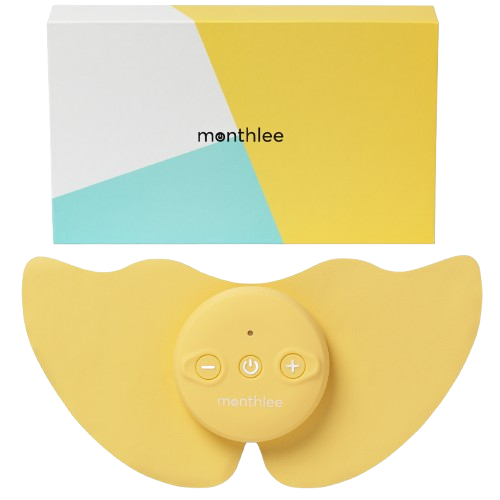
Short answer: yes, a generic TENS unit can help period pain. It uses the same technology as a period-specific device, and the evidence for TENS belongs to the method, not to any brand (Cochrane, Han et al. 2024). A generic is cheaper and has more settings. Most run two channels and four electrodes, and you can dial the frequency yourself (TENS 7000). What a period device like Emmeline adds is wearability: no wires, no belt clip, and a battery that lasts through a working day. If you'll mostly use it on the sofa, buy the generic. If you need it at your desk, that's the reason to pay more.
Sam, 26, has two tabs open. One is a TENS unit at around the price of a takeaway. The other is Emmeline. Sam has also read that branded period TENS devices are a "pink tax": the same electronics as a physio unit, sold at a mark-up because the box says period. That's a fair question, so here's a straight answer from people who sell one.
First, the obvious bias
Emmeline is ours, and we'd like you to buy it. So we'll concede first. The pink-tax criticism is real. It usually targets devices priced well into three figures, and some period TENS devices do cost that much. The underlying point is right: a TENS unit is a TENS unit. Nothing about period pain needs special electronics. It needs the right setting in the right place.
Every generic figure below comes from the seller's own page or a price-comparison listing, checked in September 2026. Prices change, so check before you buy.
What's actually the same
Both a generic unit and Emmeline:
- send small electrical pulses through sticky gel pads on your skin, which are thought to interrupt the pain signal on its way to your brain (NHS)
- work on the lower belly or lower back for period cramps
- are drug-free, so you can use them alongside painkillers
- give pain relief only. Neither does anything about endometriosis, adenomyosis or any other underlying cause.
What the evidence says. A 2024 Cochrane review found high-frequency TENS reduced pain intensity in primary dysmenorrhea (ordinary period cramps) compared with placebo or no treatment (Cochrane, Han et al. 2024). How much it helps varies from person to person. The key word is high-frequency. For period pain, the setting usually recommended is about 80–100 Hz (Dr Jen Gunter, The Vajenda). A generic unit on the wrong setting can feel like it does nothing, and that can be why people give up on TENS.
The comparison
| Typical generic TENS unit | Emmeline | |
|---|---|---|
| Price (device) | About $30–40 (TENS 7000 2nd Edition, Sept 2026) (Trolley, MedGrade) | $49.99 (RRP $69.99) |
| Frequency | Adjustable, typically 2–150 Hz (TENS 7000) | 6 preset pulse patterns, picked by feel |
| Intensity | Adjustable | 20 levels |
| Channels / pads | Usually 2 channels, up to 4 electrodes (TENS 7000) | 1 wing-shaped pad that the pod clips straight onto |
| Wires | Lead wires from the pads to a control box on a belt clip | None |
| Power | Often 9V or AAA disposable batteries, with rechargeable models costing more (MedGrade) | Rechargeable over USB-C, 5–10 hours per charge |
| Replacement pads | Standard square electrodes, cheap and sold everywhere | Angel wings, $11.99 per 2-pack (less each by the 3-pack), up to 30 uses per pad |
Where a generic TENS unit wins
Price. A generic costs less than Emmeline. That's true in the UK and the US. It isn't the three-figure gap the pink-tax argument usually targets, but it's a real gap, and if money is tight it matters.
Control. A good generic lets you set the frequency in hertz and usually the pulse width too. Emmeline gives you preset patterns rather than a number, so you pick the one that feels like a fast, smooth, strong buzz. If you like knowing exactly what you're running, the generic suits you better.
Front and back at once. Two channels and four electrodes mean you can put pads on your lower belly and your lower back together. Some people with pain in both places find that the most useful set-up (Dr Jen Gunter, The Vajenda). Emmeline covers one area at a time, and you move it if the pain moves.
Cheap, standard pads. Generic electrodes fit most units and cost little. That is a fair criticism of period devices that lock you into their own pads, and it applies to us too. Our answer is pad life: each angel wing is rated for up to 30 uses. Treat that as a best case. Real pad life depends on your skin, how you store them, and how often you clean them.
Where Emmeline wins
You can wear it to work. This is the whole difference, and it's why Emmeline exists. A generic unit is a box on your waistband with wires running under your top to the pads. That's fine at home. It's awkward at a desk, on a train or in a lecture, and plenty of people just won't use it there. Emmeline clips directly onto the angel wing, so there's nothing to route and nothing to snag. It sits flat under clothes.
It lasts the day. Emmeline runs 5–10 hours on a charge and recharges over USB-C in about two hours. You're not changing a 9V battery halfway through a shift. For Sam, who sits at a desk from nine to five and gets the worst of it on day one, that's what decides it.
A pad shaped for where it hurts. Angel wings are made for the lower belly: wide, soft, and shaped to stay put when you sit and stand. Square physio electrodes work there too, but you need two or four of them, placed correctly and wired up. See where to put TENS pads for period cramps if you go the generic route. The placement advice there applies to any device.
Less to get wrong. One easy way for a generic to "not work" for period pain is a low-frequency setting. Emmeline's patterns are there to pick by feel, and there's no menu of EMS muscle modes to wander into by accident.
If you buy a generic, set it up like this
This is the useful part whichever one you buy.
- Frequency: high. About 80–100 Hz (Dr Jen Gunter, The Vajenda). Low settings, a few Hz and felt as a slow thump, are not the ones with the evidence for period pain.
- Mode: TENS, not EMS. Many cheap units are combined TENS/EMS machines. EMS makes muscles contract, which isn't what you want on a cramping belly.
- Pads: lower belly, below the navel, or either side of the spine on your lower back. Use both channels for front and back if the pain is in both.
- Intensity: strong but never sharp. Turn it up until the buzz is firm, and turn it up again if you stop noticing it.
- Sessions: most people run 30–60 minutes, then take a short break and move the pads slightly. For more on timing, see how long to use a TENS machine for period pain.
Who should buy which
Buy a generic TENS unit if you'll mostly use it at home, you want the lowest price, you like adjusting frequency yourself, or you want front and back coverage at once. Set it up as above and it's a good, honest tool.
Buy Emmeline if you need relief where a wired box isn't realistic, such as work, school, a commute or on your feet. It's also the better fit if you want one charge to last the day, or you'd rather pick a pattern by feel than read a manual about hertz.
Buy neither yet, and see a doctor, if your period pain is severe, getting worse, or stopping you getting on with your life. The NHS advises seeing a GP if period pain is severe, has changed, or painkillers aren't helping (NHS). Any TENS device manages pain. None finds out why it's there. If you're not sure your pain is normal, start here.
Safety, for any TENS device
Don't use a TENS device if you have a pacemaker or other implanted electronic device, if you're pregnant, or if you have epilepsy, without talking to your doctor first (NHS). Don't put pads on broken or irritated skin, and don't use TENS while you sleep.
FAQ
Can I use a regular TENS unit for period cramps? Yes. The technology is the same one studied for period pain. Use a high-frequency setting of about 80–100 Hz, put the pads on your lower belly or lower back, and turn the intensity up until the buzz feels strong but not sharp.
Is a period TENS device just a normal TENS unit with a mark-up? Partly. The electronics do the same job. What you pay extra for is the design: no wires, a pad shaped for the lower belly, and a battery that lasts the day. Whether that's worth it depends on where you'll use it. At home, probably not. At work, often yes.
What setting should a TENS unit be on for period pain? High frequency, about 80–100 Hz, in TENS mode rather than EMS. Low-frequency settings haven't shown the same benefit for period pain. On a device with named patterns rather than numbers, pick the one that feels like a fast, smooth buzz.
Is Emmeline more effective than a generic TENS unit? We don't claim it is. There's no head-to-head study, and the evidence for TENS belongs to the method. What differs is how easy each one is to use, and how often you'll actually use it.
Why don't generic TENS units get used at work? Most have wires running from the pads to a control box on a belt clip. They work, but they're awkward under clothes and at a desk. Wearable period devices exist mainly to fix that.
Does either one fix the cause of period pain? No. Any TENS device relieves pain while you use it. If your pain is severe or changing, see a doctor to find out why.
The one we sell
Emmeline is a wireless TENS device for period pain. It clips onto our angel wings, soft wing-shaped pads that stick where it hurts and stay put under your clothes.
Meet Emmeline → — $49.99, 20 intensity levels across 6 pulse patterns, 5–10 hours per charge, free shipping, 60-day money-back guarantee.
keep reading
- →Period pain relief
How to help someone with period pain: what to do, what to say, and what to buy
Watching someone you love curl up with period pain and not knowing what to do is hard. Here is what the NHS suggests, what to say, what to leave unsaid, and how to know when it is time to push for a doctor.
- →TENS
Is TENS safe for period pain? Who shouldn't use it, and what to check first
For most people with ordinary period cramps, a TENS device is a low-risk option, but a few groups should not use one without medical advice. Here is who they are, where the pads must never go, and what the research says about side effects.
- →Beurer comparison
Beurer EM50 or Emmeline? A straight comparison of heat-and-TENS versus TENS-only for period pain
The Beurer EM50 Menstrual Relax combines TENS with heat in one flexible pad and has a 5-year warranty. Emmeline is ours: TENS-only, with 5–10 hours of use per charge against the Beurer's two or so. Here's a straight comparison of heat, battery, pads, warranty and price, and who each one suits.