How to use a TENS unit for endometriosis pain: placement, settings and what to expect
A practical guide to using TENS when you have endometriosis: where the pads go, which settings to start on, how long to run it, and an honest read on how much evidence there is.
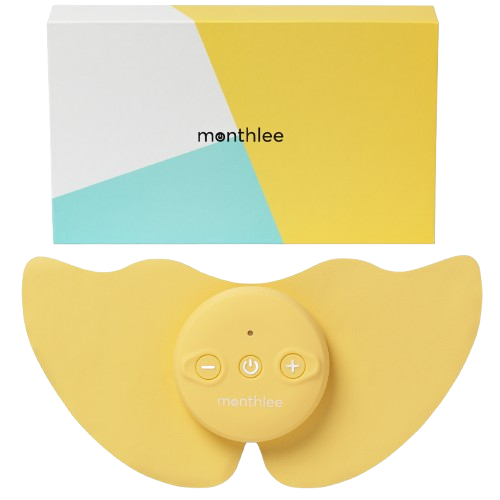
Short answer: put the pads on your lower belly or lower back, close to where the pain sits. Use a high-frequency setting, turn the intensity up until the buzz is strong but never sharp, and run sessions of 20 to 60 minutes. That setup comes from the research on ordinary period pain, where a 2024 Cochrane review found high-frequency TENS reduces pain (Cochrane, Han et al. 2024). For endometriosis the research is thin: one small 2026 pilot found better quality of life and less ibuprofen use, but no significant change in the main pain score (EJOG, 2026). So treat TENS as one low-risk tool to try alongside your treatment, not a replacement for it.
Who this is for
Jess has endometriosis. Her pain does not stay in one place: some days it is a deep ache low in the pelvis, other days it wraps round to her lower back. She has tried heat, painkillers and a lot of lying on the bathroom floor. She has been told TENS is worth a go and wants to know what to actually do with the pads.
If that sounds like you, here is the practical version. For the research behind it, see what the 2026 study found.
Check with your doctor first
TENS is generally considered low risk, but it is not for everyone. Do not use it, without checking with your doctor first, if you are pregnant (outside labour under guidance), or have a pacemaker or other implanted electronic device, epilepsy, or a heart rhythm condition (NHS). If you are under a gynaecologist or pain clinic, mention you plan to try it. A pain specialist nurse can often show you pad positions in person. More in is TENS safe for period pain.
Where to put the pads
Endometriosis pain moves around, so there is no single correct spot. Start where the pain is and adjust:
- Lower belly: at or below the level of your belly button, above the pubic area, one pad on each side. This is the usual starting point for period and endometriosis pain (Western Sydney University).
- Lower back: pads either side of the spine, at the level where the ache sits. Some people also use the base of the spine (the sacrum), especially when the pain radiates backwards (Western Sydney University).
- Where it never goes: over the front or side of the neck, on the chest, over broken or inflamed skin, or anywhere you cannot feel properly (NHS).
If the first position does nothing after about 20 minutes, move the pads rather than turning the intensity up. Placement usually matters more than power. Our guide on where to put TENS pads has the full walk-through, including what to do when it is not working.
Settings to start on
| Setting | Start here | Why |
|---|---|---|
| Frequency | High, about 80 to 100 Hz | High-frequency is the setting with evidence for period pain (Cochrane 2024; Dr Jen Gunter) |
| Intensity | Strong but comfortable, never sharp | A faint tickle is an under-dose; sharp or stinging means turn it down (Dr Jen Gunter) |
| Session length | 20 to 60 minutes, repeatable | Studies of period pain typically use 20 to 30 minutes (PMC, 2019) |
If your device has named modes instead of a number, pick the one that feels like a fast, smooth buzz rather than a slow thump. Always switch the unit off before you attach or remove the pads, start on the lowest level, and build up.
How long and how often
In the Penn State pilot, women used the unit during pain flares, as often and for as long as they wanted, with no fixed schedule, over three months (EJOG, 2026). In ordinary practice that means: use it when the pain starts, run a session, take a break, and move the pads to a fresh patch of skin before the next one. Check the skin under the pads, and stop if it goes itchy, red or irritated (NHS). Do not use it in the bath or shower, while driving, or while you sleep. For night-time pain, run a full session in the half hour before bed. More on session length in how long you can use a TENS machine.
What to expect, honestly
The Penn State pilot followed 27 women with surgically confirmed endometriosis through three months of TENS use. The main pain score did not change significantly (p = 0.44). Quality of life improved by 16.57 points on the Endometriosis Health Profile-30 (p < 0.001), and daily ibuprofen use fell by 93 mg (p = 0.02). There was no control group, so some of that could be expectation or closer symptom tracking (EJOG, 2026).
What that means for you: a realistic hope is that TENS takes the edge off a flare and helps you reach for painkillers a bit less. It is not an off switch, and it does nothing about the endometriosis itself. If your pain is getting worse, or your treatment is not working, say so to your doctor. A diary of pain scores, pad positions and what you took makes that conversation much easier. Our endometriosis must-haves list covers the rest of the kit.
Using Emmeline
Emmeline is the wearable TENS unit we sell. It runs 20 intensity levels across 6 pulse patterns and clips into the centre of our angel wings, soft wing-shaped gel pads, with no trailing wires, so you can wear it under clothes. Its wings are rated for up to 30 uses. It has no heat. TENS has been clinically studied for period pain, and how much it helps varies from person to person. We have not run a trial in endometriosis, and the research that exists is small, which is why we say: try it, track it, and tell your doctor.
Meet Emmeline → — $49.99, free shipping, 60-day money-back guarantee.
FAQ
Can you use a TENS machine for endometriosis pain? Many people do, and it is generally considered low risk if you have no contraindication such as a pacemaker, epilepsy or pregnancy (NHS). The evidence for endometriosis specifically is limited to small studies.
Where do you put TENS pads for endometriosis pain? Start on the lower belly, at or below the belly button, or on the lower back either side of the spine, close to where the pain is (Western Sydney University). Move them if nothing changes after about 20 minutes.
What setting should a TENS unit be on for endometriosis? A high frequency, about 80 to 100 Hz, with the intensity strong but never sharp (Dr Jen Gunter).
Does TENS reduce the need for painkillers? In the 2026 Penn State pilot, daily ibuprofen use fell by 93 mg, but with no control group the study cannot prove the device caused it (EJOG, 2026).
Can you wear TENS all day? Many people wear a small unit on and off through a bad day. Keep the intensity moderate, check your skin regularly, and take it off before you sleep (NHS).
keep reading
- →Heat therapy
Does heat help period cramps? What the research says, and how to use it properly
A hot water bottle is the oldest period-pain remedy there is, and it holds up. Here is what the trials found, how heat compares with painkillers, and how to use it without burning yourself, plus what it can't do.
- →Endometriosis
Endometriosis must-haves: 11 things that help on the worst days (2026 update)
A practical kit for endometriosis pain, with the evidence checked: what the research supports, what it only half supports, and what is just common sense that works.
- →Period pain relief
How to help someone with period pain: what to do, what to say, and what to buy
Watching someone you love curl up with period pain and not knowing what to do is hard. Here is what the NHS suggests, what to say, what to leave unsaid, and how to know when it is time to push for a doctor.