Top 5 ways to relieve period cramps (ranked by how fast they work)
Not all period pain solutions are equal. Here are the top 5 — ranked by how quickly they actually work, what the evidence says, and how to use them together for maximum relief.
When you're doubled over with cramps, you don't want a lecture. You want something that works — fast.
This is a ranked list. Not ranked by how natural something sounds or how popular it is on TikTok. Ranked by speed of relief, strength of evidence, and practical usability when you're already in pain.
Here we go.
1. Wearable TENS therapy — fastest acting, drug-free
If you haven't tried TENS for period pain yet, this is the thing.
TENS (Transcutaneous Electrical Nerve Stimulation) works by sending gentle electrical pulses through the skin that interrupt pain signals on their way from your uterus to your brain — a mechanism called gate control theory. Simultaneously, sustained TENS stimulation triggers endorphin release — your body's natural painkillers.
The result: significant pain reduction, typically within 5–10 minutes of application.
TENS has been studied for period pain and is a recognised drug-free option. It requires no drugs, has no side effects, and doesn't interact with anything else you're taking. You can use it for as long as you need.
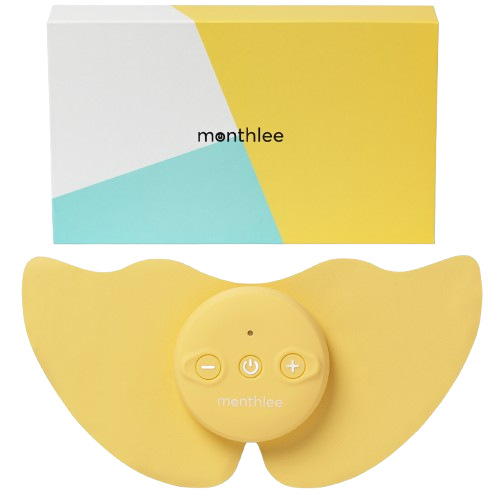
Emmeline is a wearable TENS device designed specifically for period pain. The gel pads — called angel wings — stick directly over your lower abdomen where the cramping is worst. The controller clips into the centre and runs 20 intensity levels across 6 pulse patterns. It's silent, completely discreet under clothing, and lasts up to 10 hours on a charge.
Put her on, find your setting, and get back to your life. That's the whole point.
Speed: ★★★★★ | Evidence: ★★★★★ | Drug-free: yes
2. NSAIDs (ibuprofen/naproxen) — very effective, but timing is everything
Ibuprofen (sold as Advil, Motrin in the US; Nurofen in the UK) and naproxen (Aleve in the US; available on prescription or OTC in the UK) are the most effective oral medications for period pain.
They work by blocking prostaglandins — the hormone-like chemicals that cause your uterus to contract. Less prostaglandin = less cramping. Simple.
The catch: they take 30–60 minutes to absorb and work, and they're significantly more effective if you take them before pain peaks rather than after. The standard mistake is waiting until you're already at a 7/10 before reaching for the packet.
How to use them properly:
- Start taking them the evening before your period is due (if you can predict it)
- Or take the first dose as soon as bleeding starts — don't wait for pain
- Ibuprofen: 400mg every 6–8 hours with food, max 1,200mg/day
- Naproxen: 250–500mg every 8–12 hours — lasts longer than ibuprofen
- Always take with food to protect the stomach lining
Speed: ★★★★ (slower to absorb) | Evidence: ★★★★★ | Drug-free: no
3. Heat therapy — underrated, clinically proven
A hot water bottle on the lower abdomen has been dismissed as an old wives' tale for too long. It is not.
Studies have shown that continuous low-level heat applied to the abdomen can be as effective as ibuprofen for primary dysmenorrhea. Heat works via two mechanisms: it relaxes the uterine muscle (which is involuntarily contracting), and it increases local blood flow — helping to clear the prostaglandins driving the pain.
Speed: heat takes about 15–20 minutes to provide meaningful relief — not quite as fast as TENS, but close.
Options:
- Classic hot water bottle — the most effective sustained heat source
- Microwavable wheat bag — convenient, reusable, popular in the UK
- Adhesive heat patches (ThermaCare in the US; various brands in UK pharmacies) — discreet, stick under clothing, last 8–12 hours
- Electric heat pad — good for home use, consistent temperature
The best approach is to combine heat with TENS. TENS interrupts the pain signal; heat relaxes the muscle. They complement each other and used together are significantly more effective than either alone.
Speed: ★★★★ | Evidence: ★★★★★ | Drug-free: yes
4. Magnesium supplementation — best for prevention
Magnesium doesn't work in the moment — it works in the days before your period to reduce how severe your cramps will be.
Magnesium is essential for muscle relaxation. Deficiency — which is common, particularly in people with diets low in leafy greens, nuts, and wholegrains — makes uterine cramping more severe. Supplementing in the week before your period (the luteal phase) can meaningfully reduce cramp intensity when your period arrives.
Research published in the Journal of Women's Health found magnesium significantly reduced menstrual pain compared to placebo. A 2017 meta-analysis found it was more effective than placebo and had fewer side effects than standard pain medication.
Best forms: Magnesium glycinate or magnesium bisglycinate chelate. Avoid magnesium oxide — poor absorption.
Dose: 300–360mg elemental magnesium daily, starting 5–7 days before your period.
Bonus effects: many people notice improved sleep and reduced PMS mood symptoms during this window too.
Speed: ★★ (preventative, not immediate) | Evidence: ★★★★ | Drug-free: yes
5. Gentle movement and yoga
This is the one nobody wants to hear when they're curled up on the sofa. But the evidence is real.
Gentle movement — even just a 20-minute walk — increases pelvic blood flow, reduces inflammation, and triggers endorphin release. It won't eliminate pain, but it can take the edge off and prevents the stiffness that comes from lying still for hours.
Specific yoga poses have clinical backing for period pain:
- Child's pose — releases lower back tension and decompresses the pelvis
- Supine twist — gentle compression/release on the uterus
- Cat-cow — mobilises the lumbar spine and relaxes the pelvic floor
- Legs up the wall — reduces pelvic heaviness and improves circulation
- Reclined bound angle — opens the hips and releases the lower abdomen
A 2017 study in the Journal of Alternative and Complementary Medicine found that women who practised yoga regularly had significantly lower pain scores during menstruation. You don't need to do a full class — 15–20 minutes of targeted poses is enough.
Speed: ★★★ | Evidence: ★★★★ | Drug-free: yes
The optimal protocol for day 1
Don't pick one — stack them. This is the most effective approach:
- Night before: take the first dose of ibuprofen/naproxen + start magnesium (if you haven't already this cycle)
- First thing in the morning: apply Emmeline TENS + heat patch under your clothing
- Throughout the day: keep TENS running, stay warm, hydrate, eat anti-inflammatory foods
- If pain spikes: increase TENS intensity, reapply heat, take next NSAID dose
Most people find that this approach reduces a 8/10 pain day to a 3–4/10 — and makes the difference between functioning and not.
The one you should try first
If you haven't tried TENS yet, start there. It's the fastest-acting, drug-free option — and for many people, it changes their relationship with their period entirely.
Emmeline is a wearable TENS device built for period pain. She sticks on under your clothes, works in minutes, and runs all day.
Shop Emmeline now → — 60-day money-back guarantee. Free shipping. No commitment required.
keep reading
- →Period pain relief
How to help someone with period pain: what to do, what to say, and what to buy
Watching someone you love curl up with period pain and not knowing what to do is hard. Here is what the NHS suggests, what to say, what to leave unsaid, and how to know when it is time to push for a doctor.
- →TENS
Is TENS safe for period pain? Who shouldn't use it, and what to check first
For most people with ordinary period cramps, a TENS device is a low-risk option, but a few groups should not use one without medical advice. Here is who they are, where the pads must never go, and what the research says about side effects.
- →Exercise
Does exercise help period cramps? What the research actually found
Regular exercise lowers period pain in the trials — a Cochrane review put the average drop at about 25 points on a 100-point scale. But the benefit comes from moving across the whole month, not from forcing a run on day one. Here is what the evidence says, which kinds of exercise did best, and how to train on your period.