PCOS and period pain: why it happens and how to find relief
Polycystic ovary syndrome affects 1 in 10 women — but what does it actually mean for your period, your pain levels, and your cycle? Here's the honest guide.
Polycystic Ovary Syndrome (PCOS) is one of the most common hormonal conditions affecting women of reproductive age — and one of the most misunderstood.
It's often described primarily as a fertility issue, or reduced to "you might have some cysts on your ovaries." The reality is more nuanced. PCOS is a metabolic and hormonal condition that touches almost every aspect of your cycle — including, for many people, period pain.
Here's what's actually happening, and what you can do about it.
What is PCOS?
PCOS is characterised by a combination of:
- Elevated androgens (male hormones like testosterone) — causing symptoms like acne, excess hair growth, and hair thinning
- Irregular or absent ovulation — meaning your cycle is unpredictable, or you may not ovulate at all
- Polycystic ovaries — ovaries that contain many small follicles that haven't released eggs
You don't need all three to be diagnosed. The Rotterdam Criteria (used in both the US and UK) requires just two of the three to make a diagnosis.
PCOS affects roughly 1 in 10 women worldwide — though estimates vary because it's significantly underdiagnosed. It's the most common cause of irregular periods and anovulatory infertility.
Does PCOS cause period pain?
Here's the nuance most articles miss: PCOS and period pain have a complicated relationship.
For many women with PCOS, periods are infrequent — they may only have 4–8 periods a year, or periods may be absent entirely. When periods are irregular or rare, they don't experience the monthly cramping cycle that people with regular cycles do.
However, when people with PCOS do have a period, it often comes with:
Heavier than average bleeding. Because ovulation is irregular, the uterine lining can build up thicker than usual. When it finally sheds, there's more tissue — and the prostaglandin response (the chemical that causes uterine contractions) is proportionally stronger. More prostaglandins = more pain.
Longer periods. For the same reason — the lining has had longer to build, so it takes longer to shed.
Unpredictable timing. Not knowing when your period will arrive makes preparation impossible, which makes the pain harder to manage.
Pain even outside of menstruation. Some people with PCOS experience chronic pelvic pain or discomfort related to the follicles on their ovaries, independent of their period.
There's also growing evidence that the insulin resistance often seen in PCOS drives systemic inflammation — which in turn can worsen period pain when it does occur.
Is it PCOS, or endometriosis, or both?
This is worth addressing because the conditions can co-exist and the symptoms overlap.
| Symptom | PCOS | Endometriosis |
|---|---|---|
| Irregular/absent periods | Common | Uncommon |
| Heavy bleeding | Common | Common |
| Painful periods | When periods occur, can be severe | Usually severe, often before period starts |
| Pelvic pain outside period | Sometimes | Common |
| Pain during sex | Uncommon | Very common |
| Acne, excess hair growth | Common | Uncommon |
If you have PCOS and painful periods that start before bleeding, pain during sex, or pelvic pain throughout the month — raise the possibility of co-existing endometriosis with your GP or OB-GYN. The two conditions are not mutually exclusive.
Getting a PCOS diagnosis
In the UK, diagnosis typically starts with your GP. They'll likely:
- Take a detailed history of your cycle and symptoms
- Order blood tests to check hormone levels (LH, FSH, testosterone, AMH, thyroid, and fasting glucose/insulin)
- Arrange a pelvic ultrasound to look at the ovaries
In the US, the process is similar — usually via your primary care doctor or OB-GYN. If you suspect PCOS, request hormone blood tests and an ultrasound explicitly.
Note: the "polycystic" in PCOS can be misleading. Many people with PCOS don't have cysts on ultrasound, and many people without PCOS have polycystic-appearing ovaries. The diagnosis is clinical — based on the full picture of symptoms and bloods, not just the ultrasound.
Managing PCOS to improve your cycle
There's no cure for PCOS, but it's very manageable. Treatment depends on your symptoms and goals:
For irregular periods and cycle regulation:
- Combined hormonal contraceptives (the pill) are often the first-line recommendation in both the US and UK — they regulate the cycle and reduce androgen levels
- If you're trying to conceive, your doctor may discuss ovulation induction options
For insulin resistance (a factor in around 70% of PCOS cases):
- Lifestyle changes — particularly reducing refined carbohydrates and sugar — have a meaningful impact on PCOS symptoms. This isn't about weight loss per se; it's about reducing insulin spikes that drive androgen production
- Inositol (particularly myo-inositol + d-chiro-inositol at a 40:1 ratio) has growing evidence as a supplement for improving insulin sensitivity and ovulation in PCOS
- Metformin is sometimes prescribed in the UK and US to improve insulin sensitivity
For acne and excess hair growth:
- Hormonal contraceptives, spironolactone (US), or co-cyprindiol (UK Dianette) are commonly used
For period pain specifically:
If your periods are infrequent but painful when they arrive, the same evidence-based approaches apply:
- Start NSAIDs (ibuprofen, naproxen) the evening before your period is due — or as soon as bleeding starts. Don't wait for pain to peak.
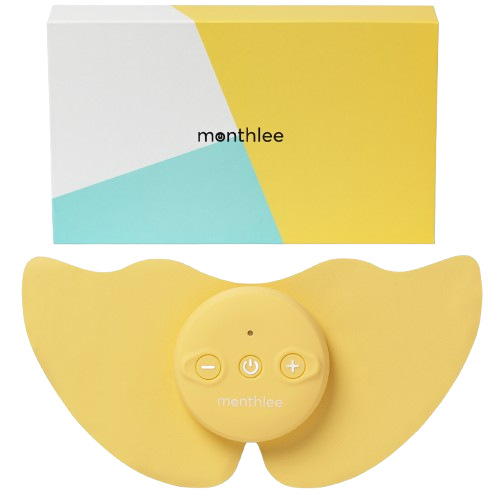
- TENS therapy — use a wearable TENS device as soon as cramping starts. It interrupts the pain signal from the uterus to the brain and triggers endorphin release, without any drugs.
- Heat — hot water bottle or heat pad on the lower abdomen throughout the first 1–2 days
- Magnesium supplementation (300–360mg elemental) in the week before your expected period — reduces muscle cramp severity
Lifestyle changes that specifically help PCOS-related period pain
Because PCOS has a systemic inflammatory and hormonal component, lifestyle has more leverage here than with primary dysmenorrhea:
Reduce refined carbohydrates and sugar. This directly addresses insulin resistance, which drives androgen production and systemic inflammation. Swap white bread and pasta for wholegrains; reduce sugary drinks and snacks.
Increase omega-3 fatty acids. Oily fish (salmon, mackerel, sardines), walnuts, flaxseed. Anti-inflammatory and beneficial for insulin sensitivity.
Exercise regularly, but don't over-train. Moderate exercise (150 minutes/week) significantly improves PCOS symptoms — particularly insulin sensitivity and ovulation regularity. Over-training, however, can worsen hormonal disruption. Keep it consistent and sustainable.
Manage stress. Cortisol directly affects PCOS through the HPA axis — chronic stress worsens androgen levels. This isn't about "just relaxing" — it's a real physiological mechanism worth taking seriously.
Sleep 7–9 hours. Sleep deprivation worsens insulin resistance and inflammation. For PCOS management, sleep hygiene is genuinely part of the treatment picture.
The bottom line
PCOS is common, underdiagnosed, and poorly understood — even by many healthcare providers. If your periods are irregular, you have symptoms of high androgens (acne, excess hair), and your cycles have always felt "off," it's worth investigating.
And when your period does arrive — whether it's every 28 days or once every 3 months — you don't have to just endure the pain. There are tools that help.
Drug-free pain relief that works even on unpredictable cycle days
Emmeline is a wearable TENS device for period pain. Keep her charged and ready — so that when your period does arrive (predictable or not), you're not caught off guard. Drug-free, works in minutes, discreet under clothing.
Shop Emmeline → — 20 intensity settings, up to 10 hours battery, 60-day money-back guarantee.
keep reading
- →TENS
How long can you use a TENS machine for period pain? (And the settings that actually matter)
There is no daily dose limit on a TENS machine the way there is with painkillers. Here is how long a session should run, how often you can use it across your period, whether you can leave it on all day, and the two settings that decide whether it works.
- →Period cramp simulator
Period cramp simulators: what the machine actually does
You've seen the videos. A man gets wired up, lasts eleven seconds, and apologises to everyone he's ever met. Here's what the machine really is, what it proves, and what it can't.
- →Period pain relief
How TENS actually stops period pain (and why it works in minutes)
TENS isn't new — physios have used it for over 50 years. Here's the physiology in plain English, why it works in minutes rather than hours, how to place the pads, and who shouldn't use it.