Can you take a TENS device on a plane? Flying with Emmeline
TENS units are allowed through airport security in both hand luggage and the hold, in the UK and the US. Here is what the TSA actually says, how the lithium battery rules apply to a small device like Emmeline, and how to get through screening without a hold-up.
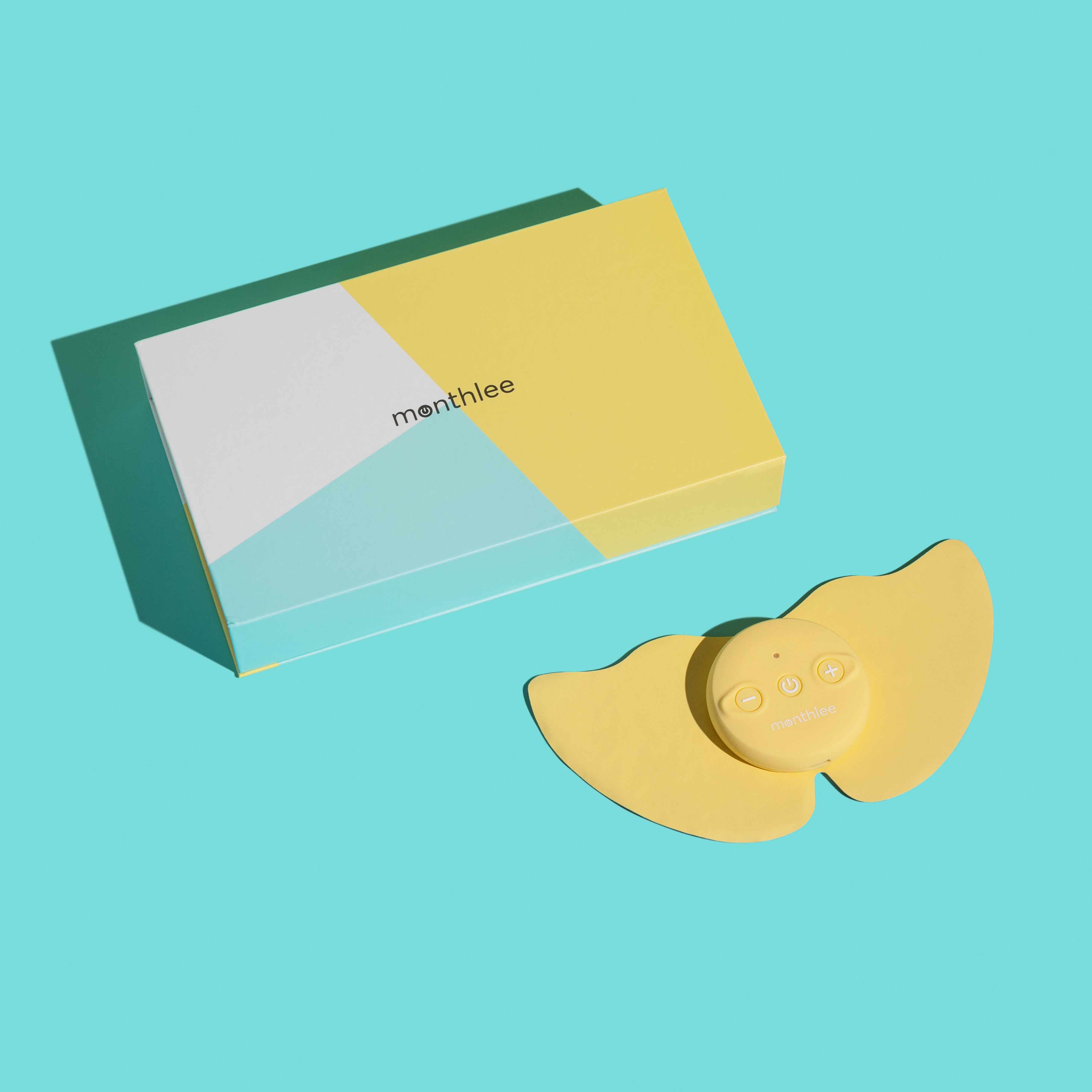
Short answer: yes. TENS devices are explicitly permitted in both carry-on and checked baggage under US airport security rules, and UK airports treat them the same way — no letter, no prescription, no special declaration needed. The one rule that actually matters is about the battery, not the device: keep it in your hand luggage rather than checked-in, because it runs on a small lithium battery, and lithium goes in the cabin. Take it out of your bag and put it in the tray at the scanner, the same as a phone. That's the whole procedure.
Why this even needs an answer
Emmeline is small enough to travel with and painful periods do not pause for a flight — so the question comes up before most trips, usually the night before, while packing. The honest answer is that TENS devices sit in the most boring possible category for airport security: TSA's own page lists them by name, and the answer is simply that they're allowed (TSA — TENS unit).
That page states plainly: "TENS (Transcutaneous electrical nerve stimulation) units are allowed in both carry-on and checked bags" (TSA). No prior notice, no medical letter, no exception process. It is treated as ordinary personal electronics, not as medical equipment requiring paperwork.
The rule that actually matters: it's about the battery, not the device
The one place people trip up isn't the TENS unit itself — it's where they pack it. Emmeline runs on a small rechargeable lithium battery, charged over USB-C, and devices with lithium batteries have a specific rule: keep them in your carry-on, not your checked bag.
This isn't a TENS-specific rule. It's the same rule that applies to your phone, your laptop, your wireless earbuds and any other small rechargeable gadget. The FAA's guidance is that devices containing lithium batteries should be carried in the cabin, and if one absolutely has to go in checked luggage, it needs to be fully switched off and protected from accidental activation (FAA — PackSafe: Lithium Batteries). The reason is heat, not electrocution risk: a damaged lithium battery can catch fire, and a fire in the cabin can be spotted and handled — a fire in the hold cannot.
For context on scale: airlines only need advance approval for lithium-ion batteries between 101 and 160 watt-hours, and anything over 160Wh is banned outright from passenger flights (IATA — Safe Travel with Lithium Batteries). A device like Emmeline, which runs a small wearable control unit for a handful of hours per charge, sits nowhere near that threshold — it's in the same "no approval needed" bracket as a phone charger, not the bracket that needs paperwork.
In practice, this means: pack Emmeline (and its USB-C cable) in the bag that stays with you in the cabin. Don't put it in a suitcase that gets checked at the desk.
Getting through the actual scanner
TSA's guidance is specific about the screening step, not just the packing rule:
- Take it out of your bag before the tray goes through the X-ray, the same way you would a laptop, so the officer gets a clear look at it rather than a bag full of overlapping shapes (TSA).
- If you've been told by a doctor that a specific device shouldn't go through an X-ray scanner, say so at the point of screening and ask for a hand inspection instead — that applies to some medical equipment generally, not something specific to TENS units (TSA — External Medical Devices). Most people never need this; it's an option, not a requirement.
- The final call always sits with the officer at the checkpoint on the day. TSA's own language keeps that door open, which is standard for every borderline item, not a red flag specific to TENS devices.
None of this requires printing anything out in advance. A device the size of a TV remote, with wing-shaped pads and a short cable, reads clearly on a scanner and rarely prompts a second look.
What about the UK side?
If you're flying out of or into the UK, the picture is less explicitly spelled out than the US one — there's no single UK page that names TENS units the way TSA's does — but the underlying rules are the same shape. UK airport security follows the same lithium-battery-in-the-cabin logic as everywhere else, and a small rechargeable medical device is routine carry-on content, not a restricted item (GOV.UK — hand luggage restrictions). If you're ever unsure, checking your specific airline's page before you travel takes two minutes and settles it — rules occasionally vary slightly by carrier, particularly around spare/portable battery counts, even when the device itself is never in question.
The device and its pouch are small enough to sit in a quart-size bag alongside your other TSA-regulated carry-on items without using up much room.
What to actually pack
- The device itself, in your carry-on.
- The USB-C charging cable — also carry-on, though it isn't a battery itself and isn't restricted.
- A couple of spare angel wings, in case a pad gives out mid-trip. Pads themselves have no battery and no restriction of any kind; they can go anywhere in either bag.
- Nothing else is needed. No case-by-case exemption, no printed letter, no advance contact with the airline.
FAQ
Do I need a doctor's note to bring a TENS unit on a plane? No. TSA does not require documentation for a TENS device — it's treated as ordinary electronics, not medical equipment needing sign-off (TSA).
Can a TENS device go in checked luggage? TSA's rule allows it in either bag, but because it runs on a lithium battery, the safer and generally advised place is your carry-on — checked lithium devices need to be fully powered off and protected from damage (FAA).
Will it set off the metal detector or need special scanning? No special handling is expected. Take it out of your bag for the X-ray tray like a phone or laptop, and unless a doctor has told you otherwise about your specific device, standard screening applies.
Can I use it during the flight? There's no rule against using a small battery-powered TENS device once you're seated with the seatbelt sign off, in the same way people use heated neck pillows or handheld fans — but check with cabin crew if you're unsure, since individual airlines can have their own in-flight electronics policies.
Does the angel wing pad need to be declared or scanned separately? No. The pads have no battery and no metal beyond a small conductive layer; they travel like any other soft personal item.
The takeaway
A TENS device is one of the least complicated things you can pack. TSA names it explicitly and says yes; UK security follows the same general electronics rule; the only thing to actually remember is that the battery belongs in your carry-on, not your suitcase. Pack Emmeline in the bag that stays with you, take it out for the scanner, and you're through — no different from packing a phone charger.
See Emmeline → — $49.99, with angel wing refills from $11.99 per 2-pack for the trip.
keep reading
- →Pixie comparison
Pixie or Emmeline? A straight comparison of two wearable TENS devices for period pain
Pixie Pulse markets itself on being thin and unnoticeable under clothes. Emmeline is ours, and is genuinely wireless. Here is a straight comparison of price, battery, pads, returns and what 'discreet' actually means for each device.
- →TENS
How long can you use a TENS machine for period pain? (And the settings that actually matter)
There is no daily dose limit on a TENS machine the way there is with painkillers. Here is how long a session should run, how often you can use it across your period, whether you can leave it on all day, and the two settings that decide whether it works.
- →TENS
Where to put TENS pads for period cramps (front, back, and the fix when it's not working)
Pad position changes how much a TENS device helps more than the intensity setting does. Here is exactly where the pads go for front cramps and for period back pain, why those two spots, and what to move when you are not feeling any relief.