5 ways to survive heavy period days without cancelling everything
Day 1 and 2 can feel like a write-off. They don't have to be. Here are 5 practical strategies for getting through your heaviest days without crawling under a blanket and giving up.
Some months, your period arrives like a mild inconvenience. Other months — particularly if you have endometriosis, adenomyosis, fibroids, or just bad luck — it arrives like a full-body assault.
Day 1 and day 2 can genuinely be hard. This isn't complaining. This is physiology: high prostaglandin levels, heavy bleeding, muscle cramps, fatigue, and in some cases pain that competes with labour. It's a lot.
But "hard" doesn't have to mean "write-off." Here are 5 strategies that actually help — ranked by impact.
1. Lead with TENS — and put it on early
This is the most impactful thing most people aren't doing.
TENS (Transcutaneous Electrical Nerve Stimulation) works by sending low-level electrical pulses through the skin that interrupt the pain signal from your uterus before it reaches your brain. Simultaneously, it triggers endorphin release — your body's own pain relief. The result: significant pain reduction, typically within 5–10 minutes.
The key insight that most people miss: TENS works best when you put it on early. Don't wait until you're doubled over at an 8/10 — by that point you're chasing the pain. Put it on when cramping first starts, or even as soon as your period begins on heavy months when you know what's coming.
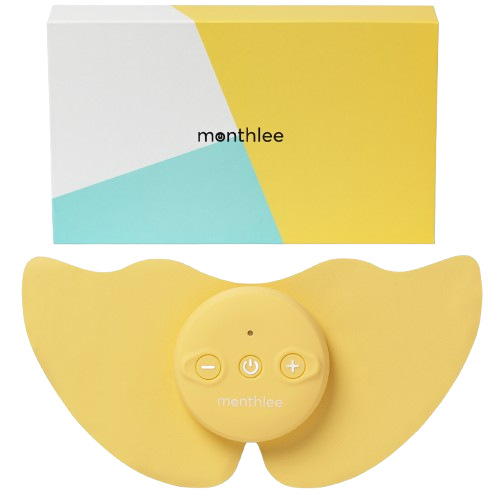
Emmeline is a wearable TENS device designed specifically for period pain. The angel wings gel pads stick to your lower abdomen, the controller is silent and completely discreet under clothing, and she runs for up to 10 hours — enough for your entire work day. 20 intensity levels means you can dial up when pain spikes and back down when it eases.
Heavy day strategy: put Emmeline on first thing in the morning, before pain peaks. Keep her on all day. Adjust intensity as needed.
2. Front-load your NSAIDs — don't wait for the pain
Ibuprofen (Advil/Nurofen) and naproxen (Aleve) work by blocking prostaglandins — the chemicals your uterus releases to trigger contractions. The problem: they take 30–60 minutes to absorb and work. If you wait until pain is severe before taking them, you're already behind.
The single most impactful change most people can make: take your first dose the evening before your period is due, or as soon as bleeding starts — not when pain becomes unbearable.
- Ibuprofen: 400mg every 6–8 hours with food. Max 1,200mg/day.
- Naproxen: 250–500mg every 8–12 hours — lasts longer, good for all-day cover
- Always with food — NSAIDs can irritate the stomach lining, particularly on an empty stomach
On truly heavy days, some people find alternating ibuprofen and paracetamol/acetaminophen every 3–4 hours keeps pain more consistently managed than either alone. Ask your pharmacist.
3. Build a heat layer from the start
Heat is not a consolation prize — it's clinically proven to reduce period pain with effectiveness comparable to ibuprofen.
It works via two mechanisms: heat relaxes the smooth muscle of the uterus (which is cramping), and it increases local blood flow — helping to clear the prostaglandins that are causing the contractions.
The trick is sustained heat, not occasional warmth. A hot water bottle you have to keep reheating isn't as effective as a consistent heat source.
Best options for heavy days:
- Adhesive heat patches (ThermaCare in the US; multiple brands at UK pharmacies) — stick to your skin or inside your clothing, last 8–12 hours, completely invisible. These are life-changing for work and school days.
- Electric heat pad — for home use, the most consistent and controllable heat source
- Hot water bottle — classic, effective, but cools down and needs refilling
Pro tip: combine heat with TENS. They work via different mechanisms and complement each other — heat relaxes the muscle, TENS cuts the pain signal. Together they're significantly more effective than either alone.
4. Renegotiate your day — don't just endure it
This is practical strategy, not advice to "just rest more."
Pain is cognitively demanding. Functioning through severe period pain requires active management of your energy and schedule — not just pain medication and hoping for the best.
What actually helps:
Front-load the important things. Pain typically peaks mid-morning and eases by early afternoon. If you have any flexibility, schedule the cognitively demanding tasks for early in the day (when TENS and NSAIDs are in full effect) and the low-effort tasks for the afternoon.
Eat protein, not sugar. Blood sugar crashes amplify pain perception and worsen fatigue. On heavy days, avoid relying on quick sugary fixes. Protein-rich snacks — nuts, eggs, Greek yogurt — keep blood sugar stable and support energy.
Hydrate more than usual. Dehydration makes cramping measurably worse. If you're bleeding heavily, you need more fluid than normal. Water and electrolyte drinks are better than caffeine, which can worsen cramping.
Don't try to be stoic — ask for what you need. If you need to work from home, take a longer break, leave early, or move a meeting — ask. You don't owe anyone an explanation. "I'm not feeling well" is sufficient. The period tax is real: most people with severe period pain spend years absorbing the cost personally rather than asking for minimal adjustments. That's not sustainable.
5. The magnesium prep (for next month)
This one works in advance, not in the moment — but it's worth putting here because it can meaningfully reduce how bad heavy days are.
Magnesium is essential for muscle relaxation. Low magnesium levels (very common, particularly in people with high-sugar or processed-food diets) make uterine cramping measurably worse. Supplementing in the luteal phase — the 5–7 days before your period — reduces cramp severity when your period arrives.
What to take: Magnesium glycinate or magnesium bisglycinate, 300–360mg elemental per day, starting 5–7 days before your period. Avoid magnesium oxide — poor absorption rate.
Bonus: many people find magnesium in the luteal phase also helps with sleep, mood, and PMS symptoms — not just cramping.
It won't save this month. But if you start now, next month will be better.
The bottom line: stack your tools
Heavy period days require a multi-tool approach. No single intervention does everything — but combining TENS, NSAIDs, sustained heat, sensible scheduling, and magnesium prep creates a genuinely manageable heavy day rather than a written-off one.
The people who cope best aren't the ones with higher pain tolerance. They're the ones who've stopped trying to white-knuckle through it and started actually using the tools that work.
Your most effective first line of defence
Emmeline is a wearable TENS device for period pain. Put her on early, run her all day, and stay on top of everything else. That's the heavy day playbook.
Shop Emmeline → — 20 intensity levels, 10-hour battery, discreet under clothing. Free shipping. 60-day money-back guarantee.
keep reading
- →TENS
Is TENS safe for period pain? Who shouldn't use it, and what to check first
For most people with ordinary period cramps, a TENS device is a low-risk option, but a few groups should not use one without medical advice. Here is who they are, where the pads must never go, and what the research says about side effects.
- →TENS
How long can you use a TENS machine for period pain? (And the settings that actually matter)
There is no daily dose limit on a TENS machine the way there is with painkillers. Here is how long a session should run, how often you can use it across your period, whether you can leave it on all day, and the two settings that decide whether it works.
- →TENS
Where to put TENS pads for period cramps (front, back, and the fix when it's not working)
Pad position changes how much a TENS device helps more than the intensity setting does. Here is exactly where the pads go for front cramps and for period back pain, why those two spots, and what to move when you are not feeling any relief.