Why are my period cramps so bad? 6 reasons (and what actually helps)
Severe period pain isn't something you should just push through. Here are six medical reasons your cramps might be worse than usual — and what you can actually do about them.
If you've ever Googled "why are my period cramps so bad" at 2am while pressing a hot water bottle into your stomach, this one's for you.
First: you're not being dramatic. Dysmenorrhea (the medical term for painful periods) affects up to 90% of people who menstruate — and for about 1 in 5, the pain is severe enough to interfere with daily life. Missing school, calling in sick to work, cancelling plans. That's not a character flaw. That's a real medical symptom that deserves a real answer.
So why does it happen — and why is it worse for some people than others?
1. Primary dysmenorrhea: the "standard" version
This is the most common cause. Every month, your uterus (womb) contracts to shed the lining. Those contractions are triggered by hormone-like chemicals called prostaglandins — and the higher your prostaglandin levels, the stronger the contractions, and the worse the pain.
Some people naturally produce more prostaglandins than others. Higher levels = stronger uterine contractions = more intense cramps. This is called primary dysmenorrhea — painful periods with no underlying condition — and it typically starts within a few years of your first period.
The good news: primary dysmenorrhea tends to improve with age, and there are effective treatments (more on that below).
2. Endometriosis
This is one of the most common — and most underdiagnosed — causes of severe period pain. Endometriosis happens when tissue similar to the uterine lining grows outside the uterus: on the ovaries, fallopian tubes, bladder, bowel, or elsewhere.
Every month, that tissue responds to your hormones the same way the lining inside your uterus does — swelling and bleeding. But because it has nowhere to go, it causes inflammation, scar tissue, and intense pain.
Signs it could be endo:
- Period pain that starts before your period (not just on day 1)
- Pain during or after sex
- Pain when using the bathroom during your period
- Fatigue during your cycle that feels disproportionate
- Heavy bleeding or bleeding between periods
Endometriosis affects roughly 1 in 10 women in the US and UK, yet the average diagnosis takes 7–10 years. If this sounds familiar, push your GP or OB-GYN for a referral. You deserve to be taken seriously.
3. Adenomyosis
Less talked about than endometriosis, adenomyosis is when the tissue that normally lines the uterus grows into the muscular wall of the uterus itself. The result: an enlarged, tender uterus (womb) and period pain that can be significantly more severe than typical cramps.
Common signs include:
- Heavy, prolonged periods
- Intense cramping that feels like it's deep inside
- A "full" or "heavy" feeling in the lower abdomen
- Pain that doesn't ease with standard pain relief
Adenomyosis is more common in people who have had children, but it's not exclusively a post-pregnancy condition. Ultrasound or MRI can usually detect it — again, advocate for a referral if you suspect this.
4. Uterine fibroids
Fibroids are non-cancerous growths in or around the uterus. They're more common than most people realise — up to 70% of women develop them at some point, though many never cause symptoms.
When they do cause symptoms, period pain and heavy bleeding are the most common. Fibroids can press on nearby structures, distort the uterine cavity, and significantly worsen cramping. If your pain has got worse over time and your periods have got heavier, mention fibroids to your doctor.
5. Polycystic Ovary Syndrome (PCOS)
PCOS is a hormonal condition affecting up to 1 in 10 women. It's primarily associated with irregular periods, but for those who do have regular cycles, the periods can be heavier and more painful than average.
PCOS disrupts the normal hormonal balance of your cycle, which can lead to a thicker-than-usual uterine lining — and when that lining sheds, the prostaglandin response can be more intense, making cramps worse.
Other signs of PCOS include irregular or absent periods, acne, excess body hair, and difficulty managing weight. It's diagnosed by a combination of blood tests and ultrasound — if you suspect it, your GP or OB-GYN can run the tests.
6. Pelvic Inflammatory Disease (PID)
PID is an infection of the reproductive organs — usually caused by sexually transmitted bacteria like chlamydia or gonorrhoea that's been left untreated. It causes pelvic pain that often gets worse during your period.
If your period pain is new, getting worse, comes with unusual discharge, fever, or pain during sex — see a doctor promptly. PID is treatable with antibiotics, but it can cause long-term fertility problems if left too long.
What actually helps with period cramps
Knowing why your pain happens doesn't make it stop. Here's what the evidence actually supports:
NSAIDs (ibuprofen, naproxen, Advil, Nurofen) — these reduce prostaglandin production, which is why they work better for period pain than paracetamol (acetaminophen) alone. Start taking them the day before your period if you can.
Heat — a hot water bottle or heat pad on the lower abdomen relaxes the uterine muscle and boosts blood flow. It genuinely works. Pair it with anything else.
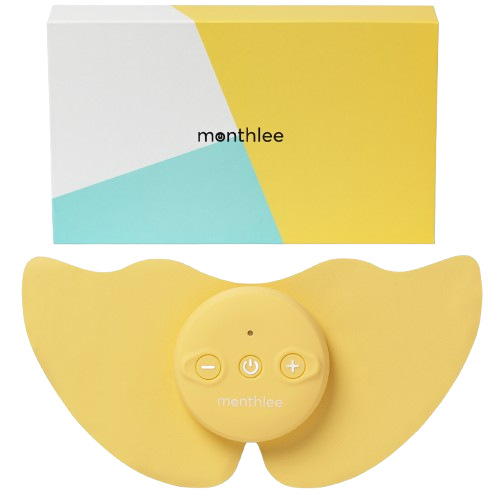
TENS therapy — a TENS machine (or wearable TENS device) sends gentle electrical pulses through the skin to interrupt pain signals before they reach the brain, and triggers the release of endorphins. It has been studied for period pain and is a recognised drug-free option. No drugs, no side effects, and most people feel it working within minutes.
Movement — gentle exercise like walking or yoga increases blood flow and releases endorphins. It's the last thing you want to do, but even a short walk can help.
Magnesium — evidence suggests magnesium deficiency can worsen cramps. Magnesium glycinate or bisglycinate supplementation (300–360mg elemental) in the week before your period may reduce intensity.
Medical treatment — if your pain is caused by an underlying condition, treating the condition is the priority. Hormonal contraception, prescribed NSAIDs, surgical options (for endo or fibroids) — work with your doctor to find what's right for your situation.
The bottom line: severe period pain is not just part of being a woman. It's a symptom. Sometimes it's primary dysmenorrhea that responds well to TENS and NSAIDs. Sometimes it's pointing to something worth investigating. You know your body best — don't let anyone dismiss what you're experiencing.
Try drug-free relief with Emmeline
If you're looking for something that works right now — without adding more pills to the equation — Emmeline is a wearable TENS device designed specifically for period pain. Clip her onto the angel wings, press them over your lower abdomen, and she gets to work in minutes.
20 intensity levels. 6 pulse patterns. Up to 10 hours battery. Drug-free.
60-day money-back guarantee. Free shipping. No subscriptions required.
keep reading
- →TENS
How long can you use a TENS machine for period pain? (And the settings that actually matter)
There is no daily dose limit on a TENS machine the way there is with painkillers. Here is how long a session should run, how often you can use it across your period, whether you can leave it on all day, and the two settings that decide whether it works.
- →Endometriosis
Does TENS actually help endometriosis pain? What a new 2026 study found
A new pre-post study out of Penn State followed 27 women with surgically confirmed endometriosis using a TENS unit for three months. The headline pain score didn't move enough to call it a win — but quality of life and pain-medication use both did, significantly. Here's what the study actually measured, what it didn't, and how it's different from the stronger evidence behind TENS for ordinary period pain.
- →Period cramp simulator
Period cramp simulators: what the machine actually does
You've seen the videos. A man gets wired up, lasts eleven seconds, and apologises to everyone he's ever met. Here's what the machine really is, what it proves, and what it can't.